Guest Post: Megan Pomper on What Makes a Bird?
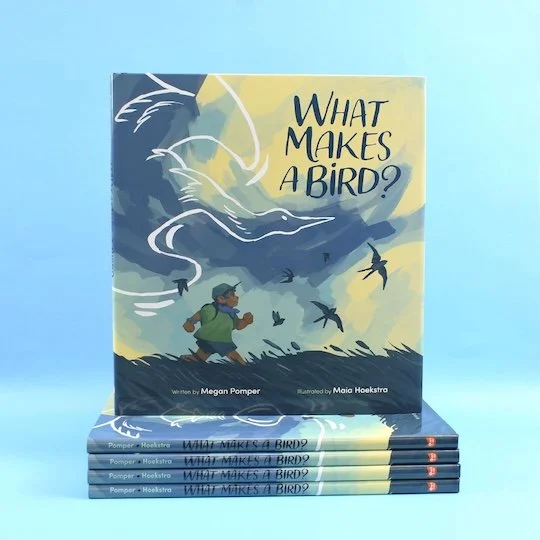
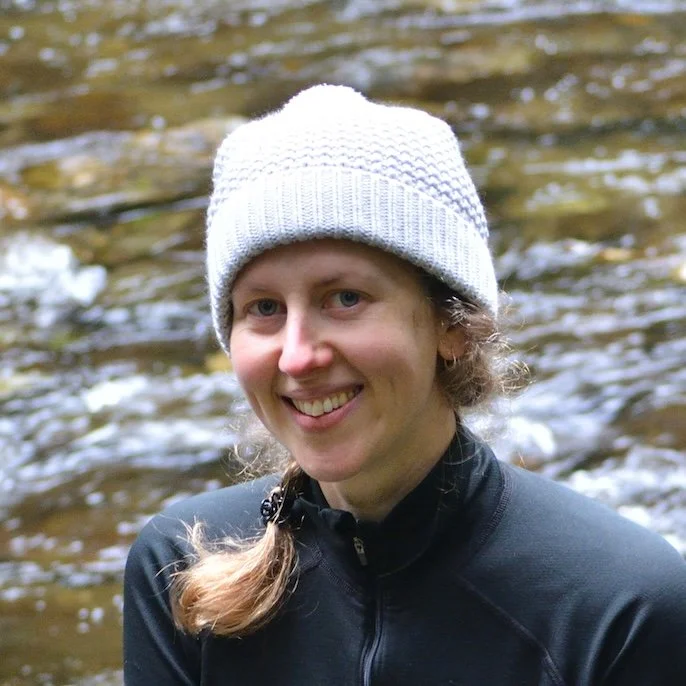
Photo courtesy of Megan Pomper
I met Megan Pomper when our books were both shortlisted for the City of Victoria Children’s Book Prize. Megan’s book, What Makes a Bird? follows a child asking that singular question. It follows a child’s curiosity. In seeking to define a bird, the book accomplishes many things at once.
It shows us the amazing range of birdlife while serving as an introduction to sameness and difference, categories and criteria. It teases apart feathers, flight, songs, nesting, eggs, and migration, showing how shape, habit, and habitat combine to make each bird species distinct, yet part of a larger avian family. Maia Hoekstra’s full page and spot illustrations will help children connect observation to understanding and encourage backyard investigations. Shades of blue, creamy yellow and orange contrast with white line-work depicting bird silhouettes, bubbles, shoreline, and the light in the sky.
It’s my pleasure to invite Megan Pomper here to tell us about what made this book. Bark boats and leaf passengers are involved, as well as a surprised blue heron.
Birdwatching, Thought-watching
by Megan Pomper
New Year’s Eve, on a neighbourhood trail, my family and I stopped to toss stones in the creek and make bark boats carrying leaf passengers down the current. After following many ill-fated boats from one side of the bridge to the other, we turned back to make another and, all at once, we noticed a Blue Heron standing in the water. It had to have been there the whole time. And after seeing it, it seemed impossible that we had not immediately noted its impressive frame dominating the surroundings.
“Thoughtful or quiet contemplation isn’t always...appealing. Or even noticeable. Even though the opportunity is all around us, if we approach without intent, we can miss the Blue Heron right beside us. ”
It can be easy to forget to take our time. We are in a world that celebrates the speed and steady flow of information. Fast and flashy. Convenient and constant. But these advances can come at the expense of stopping, looking, experiencing, thinking. Thoughtful or quiet contemplation isn’t always as appealing. Or even noticeable. Even though the opportunity is all around us, if we approach without intent, we can miss the Blue Heron right beside us.
My main intention behind What Makes a Bird? was to have readers make a connection between defining a bird and their ability to define themselves. A questioning narrative was helpful in gently guiding towards these ideas. But a latent benefit of doing so, was to create the opportunity to let readers stop and think. Maia Hoekstra’s gorgeous spreads complemented that benefit by urging readers to pause and take in the sweeping, mystical nature of their art.
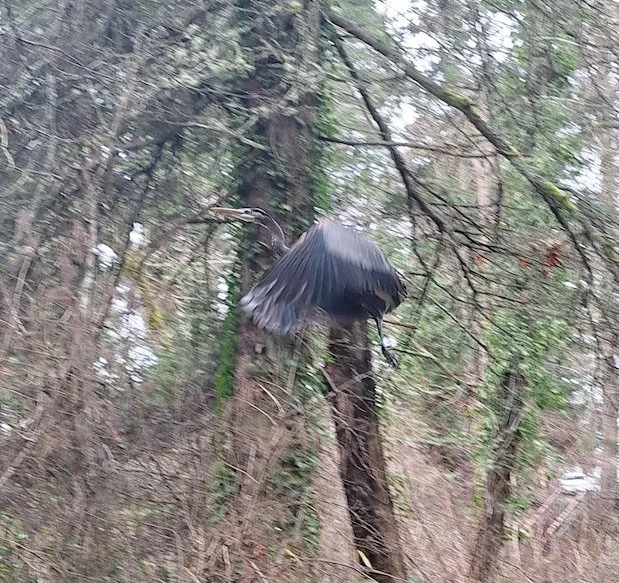
Blue heron © Megan Pomper
Before writing What Makes a Bird? I never thought too much about birdwatching. I’ve always enjoyed the beauty and diversity of birds, but I never appreciated birdwatching—the act itself. At first glance it can appear passive, but is it purposeful? It is the intentional choice to stop. To take time. To look and relook. To notice and explore. And while it was not my ultimate priority, I am heartened that this book gave the time and space to thinking. Thought-watching, if you will.
And while I ruined my bird-watching experience by hurriedly trying to take a picture (thus causing the heron to fly away …) I know another opportunity is always waiting nearby.
I love the idea of thought-watching. It’s such an important part of the process. Congratulations, Megan, and thanks for sharing these insights.