History and the Uncertain Present in The White House Effect
Towards the end of last year, a time that seems now like an eon ago, I wrote about the oddities of a 1996 children’s book from GM, no less, that aimed to push—really!—an American electric car.
With little fanfare, electric cars had begun to appear on California’s roads. They were tested on select groups nationwide. They were quiet. They emitted no fumes. Their drivers loved them. Yet ten years later they were all gone. It would take another two decades for the EV to reappear as a viable, if partial and imperfect, way to reduce air pollution and greenhouse gas emissions. A 2006 documentary asks, why should we be haunted by the ghost of the electric car? Why, indeed?
In similar vein, The White House Effect (2024), directed by Pedro Kos, Jon Shenk, and Bonni Cohen, is a thoughtful, often unsettling look at moments when American political leadership had an opportunity to change the trajectory of global warming. Policy windows were open. Scientific consensus that global warming was real and human-caused was solidifying. And yet, here we are today.
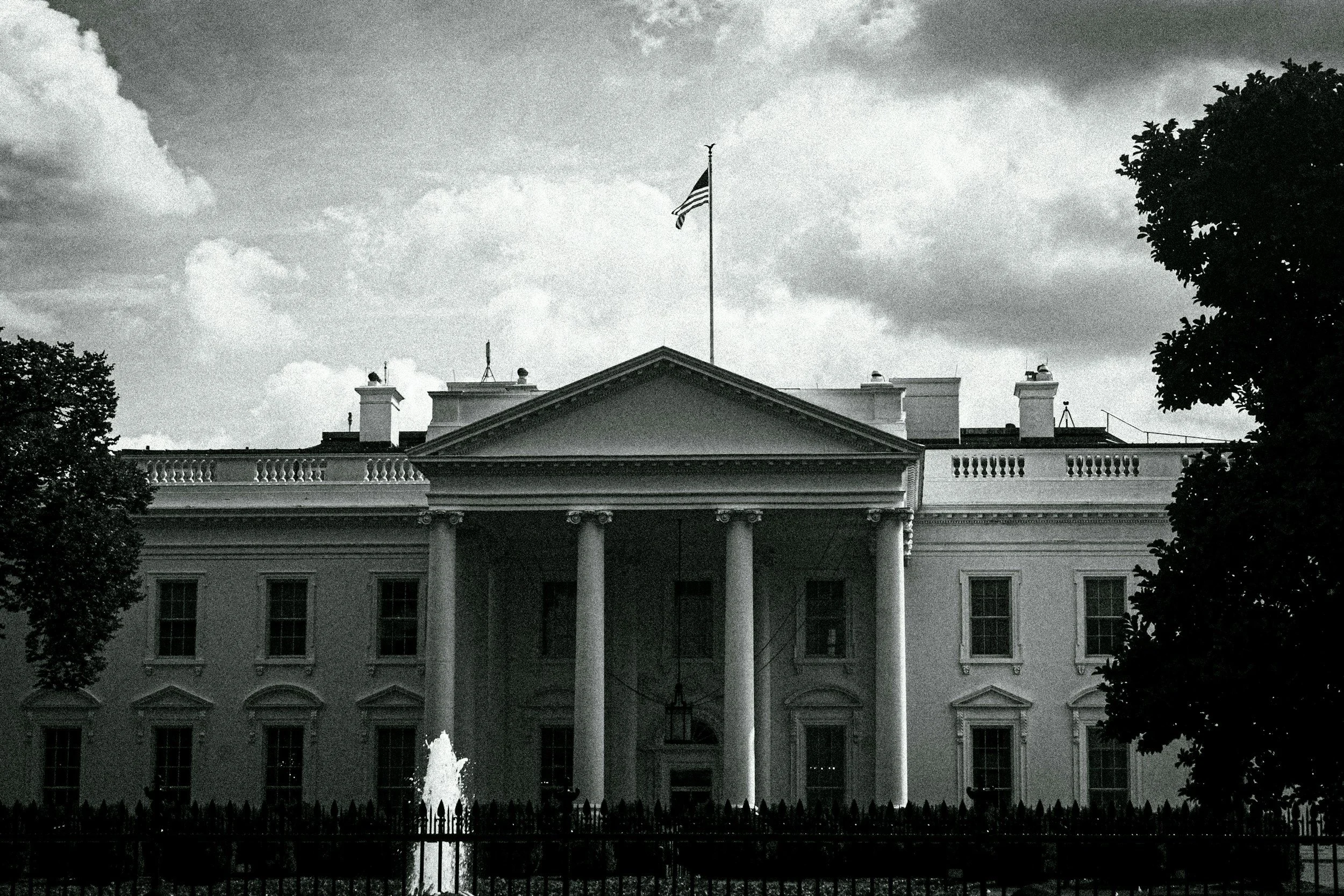
Photo source: Unsplash © Andriy Miyusov
“These issues know no ideology, no political boundaries…those who think we’re powerless to do anything about the greenhouse effect—they’re forgetting about the White House effect.”
The film focuses on a time before text became a verb, when you dialled a phone and there was no such thing as an influencer. Yet, 1988 saw a June hotter than any on the historical record. With drought conditions in forty-eight states, and a senate hearing on the greenhouse effect, you’d think that was the moment for collective action.
It could have been. We see President Reagan and then Vice-President George H. W. Bush speaking, in blistering hot fields, to farmers affected by the drought.
It’s hard to imagine now, but when Bush won the presidency, he wanted to lead on the environment. He connected fossil fuels with the greenhouse effect, saying, “These issues know no ideology, no political boundaries…those who think we’re powerless to do anything about the greenhouse effect—they’re forgetting about the White House effect.”
For an earlier might-have-been moment, the film rewinds the timeline to 1977 and President Jimmy Carter's earnest efforts to tackle the energy crisis by embracing solar power. When a good idea’s that far ahead of its time, it's bound to get beaten down. Still, it’s hard today to see the woman on her living room couch after Carter’s begun talking about conserving energy. It’s especially hard to hear her laugh and say, “Well, I don’t like to be cold in the winter.”
When he debated Reagan, Carter said, “Governor Reagan's approach to our energy policy is to put all our eggs in one basket and give that basket to the major oil companies.” He was, of course, correct. That is what Reagan did. Regulations tumbled like dominoes. Drilling became the sound of money and 1981 saw a great coal rush. Exxon researched the greenhouse effect, only to suppress its own findings. The drive to drill came up against inevitable disasters. Protests erupted. Then the White House let “greenhouse effect skeptics” in through the door. Conspiracy theories blossomed. Wars broke out and disrupted the flow of oil and gas, and the nation cycled back all over again to the myth of “safe” extraction.
It’s both enlightening and unnerving to see all this play out in newsclips, and that is the power of this film. No commentary, no voiceovers. Just the grainy footage spooling through history, sometimes backing up, sometimes skipping forward to connect the dots. It’s neither polemic nor exoneration, but rather, a close look at events, process, and consequence. It offers a clear, sobering lesson on the costs of delay.
The White House Effect shows how hard-won climate protections have been in American history. In 2009, the EPA issued an Endangerment Finding, a landmark determination that greenhouse gas pollution threatens public health and welfare.
Which brings us—sob!—to the present. Today’s EPA has rescinded that finding and is working as hard as it can to roll back climate protections. Oh, and 47 doesn’t like EVs, so gas cars rock and polluters rule. Although a youth-led constitutional petition is pushing back, it’s a sad day when the grownups in charge have abdicated their responsibility to guarantee children a safe and healthy environment to live in.
With the present as the frame, The White House Effect feels like a funhouse mirror through which we should look, because we will see ourselves. If we like what we see, we’re in deep trouble!