Guest Post: Shruthi Rao on When Science Stood Still
Sometimes you come across a book someone else wrote that taps precisely into a story you wanted to tell yourself, that you perhaps tried to tell and never quite managed to. That’s part of the writing life. You chalk it up to experience and move on. But wait, twice? Twice, and it turns out to be the same writer who snagged the very story fruit you were reaching for? Can this happen twice?
Reader, it did. Shruthi Rao has managed to bring to the page two-count-em-two book ideas I tried desperately to pitch for decades without finding traction. What was the problem? Timing? Focus? Execution? Too much critique? Not enough? Who knows?
The first of Shruthi’s books I came across was India in Triangles: The Incredible Story of How India was Mapped and the Himalayas Measured, co-written with Meera Iyer.
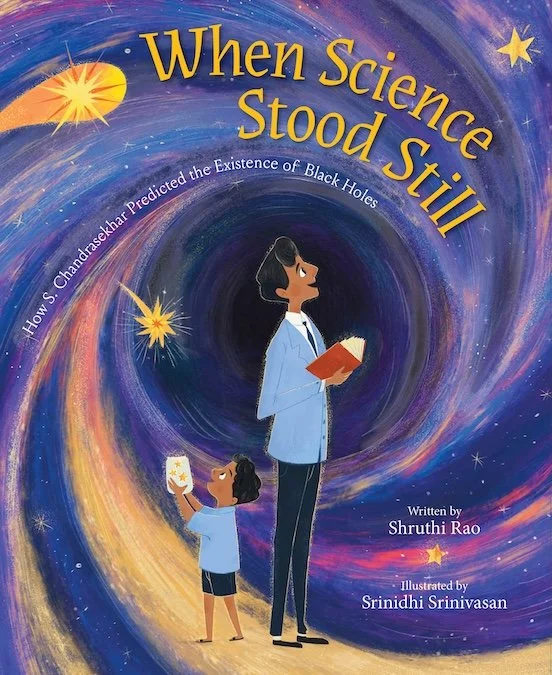
The second is the focus of today’s guest post—When Science Stood Still: How S. Chandrasekhar Predicted the Existence of Black Holes.
You can do one of two things when you're faced with the reality that someone else has written a book you once badly wanted to write. You can sulk, or you can read the competition. I decided to read—and found resolution for myself. Lots to admire here and plenty of other stories left for me to tell.
Upshot: I’m delighted to welcome Shruthi Rao to Writing With a Broken Tusk to talk about her journey in finding and telling the story of Nobel laureate S. Chandrasekhar.
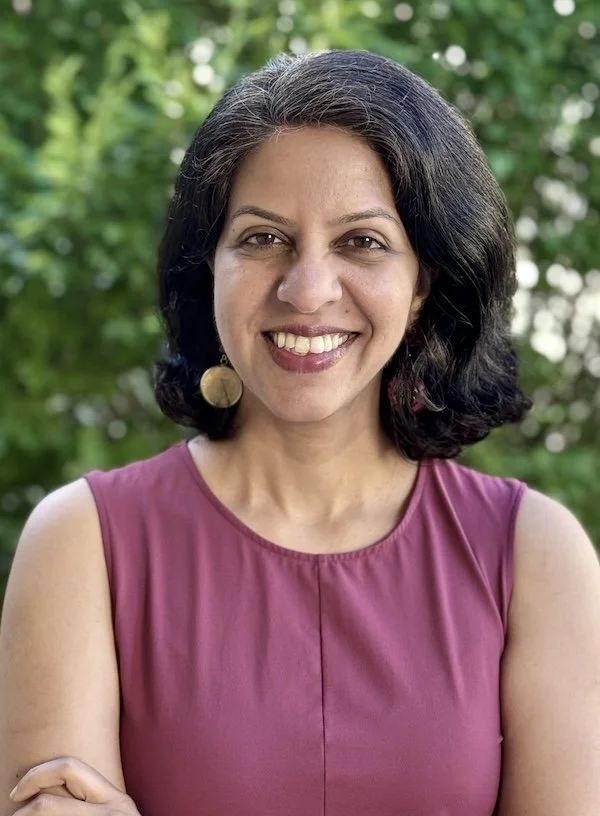
Photo courtesy of Shruthi Rao
That Feeling
by Shruthi Rao
Fifteen years ago, I read Chandra, a biography of the astrophysicist and Nobel Laureate S. Chandrasekhar, written by Kameshwar C Wali. It’s an eminently readable book. But what stayed with me above all else was Chandra’s quiet dignity. How did Chandra, as a young man whose brilliant, groundbreaking discovery was ridiculed publicly, refuse to be struck down by the unfairness of it all? What made him dust himself off and get on with the rest of his life and work? Where did that maturity and strength come from? It had a deep impression on me.
Besides, growing up in India, I had heard about Chandra only vaguely. Granted, he hadn’t worked in India, not like his Nobel Laureate uncle CV Raman, who was a household name in India. But Chandra should’ve been better known – if not for anything else, at least for this story of strength and dignity in the face of public humiliation.
I drew myself up. I’ll be the one to make him famous, I told myself. I’ll tell his story. I’ll be the reason children of today will grow up knowing his name …
All good. Except for a teeny tiny detail I'd overlooked.
The story of Chandra’s resilience is inextricably tied to the notoriously difficult science of astrophysics.
I drew myself up again. I have a STEM background. I can learn about the birth and death of stars. I can …
You can guess how this goes.
The deeper I dug, the more questions I had.
The more I read, the less I understood.
Finally, I felt my brain had just about managed to wrap itself around black holes, dwarf stars, red giants, neutron stars, supernovae, the Chandrasekhar Limit …
until I tried to put it all into words.
“...one day, nearly sixty drafts in, when I least expected it – it happened. That feeling that as a writer, I live for. The feeling that many writers will recognize. I had found the song of the manuscript. It ‘felt’ right.”
I couldn’t help but think of a quote attributed to Albert Einstein – “If you can’t explain it to a six-year-old, then you don’t really understand it.”
So it was back to learning, writing, re-learning, re-writing, and then I had to weave it all into Chandra’s story within the few words that the picture book format offers writers. I had to bring in emotion, tease out the heart, make it simple and engaging, all this without compromising on the accuracy of the science. And making sure it’s neither too heavy nor too light on the science.
I realized that one of the biggest problems was that adding a scientific word or fact or detail into the story had to be accompanied by related explanation or context. Think of it like adding salt into a pot. I couldn’t add pinches of salt into the pot at a time. I had to add salt in fistfuls. So, very often, I was faced with the choice to either add an entire fistful of salt, or not add it at all.
It was excruciating.
But one day, nearly sixty drafts in, when I least expected it – it happened. That feeling that as a writer, I live for. The feeling that many writers will recognize. I had found the song of the manuscript. It “felt” right.
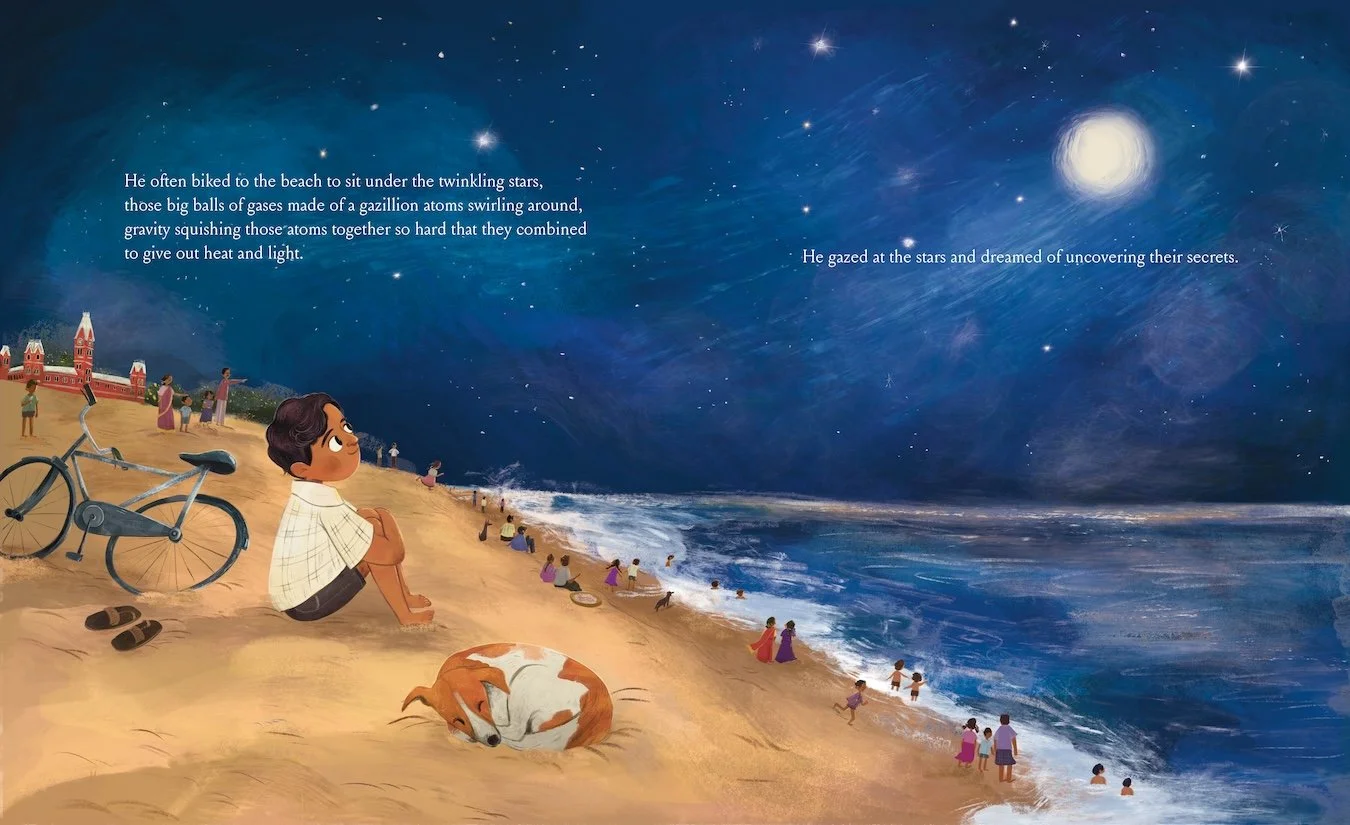
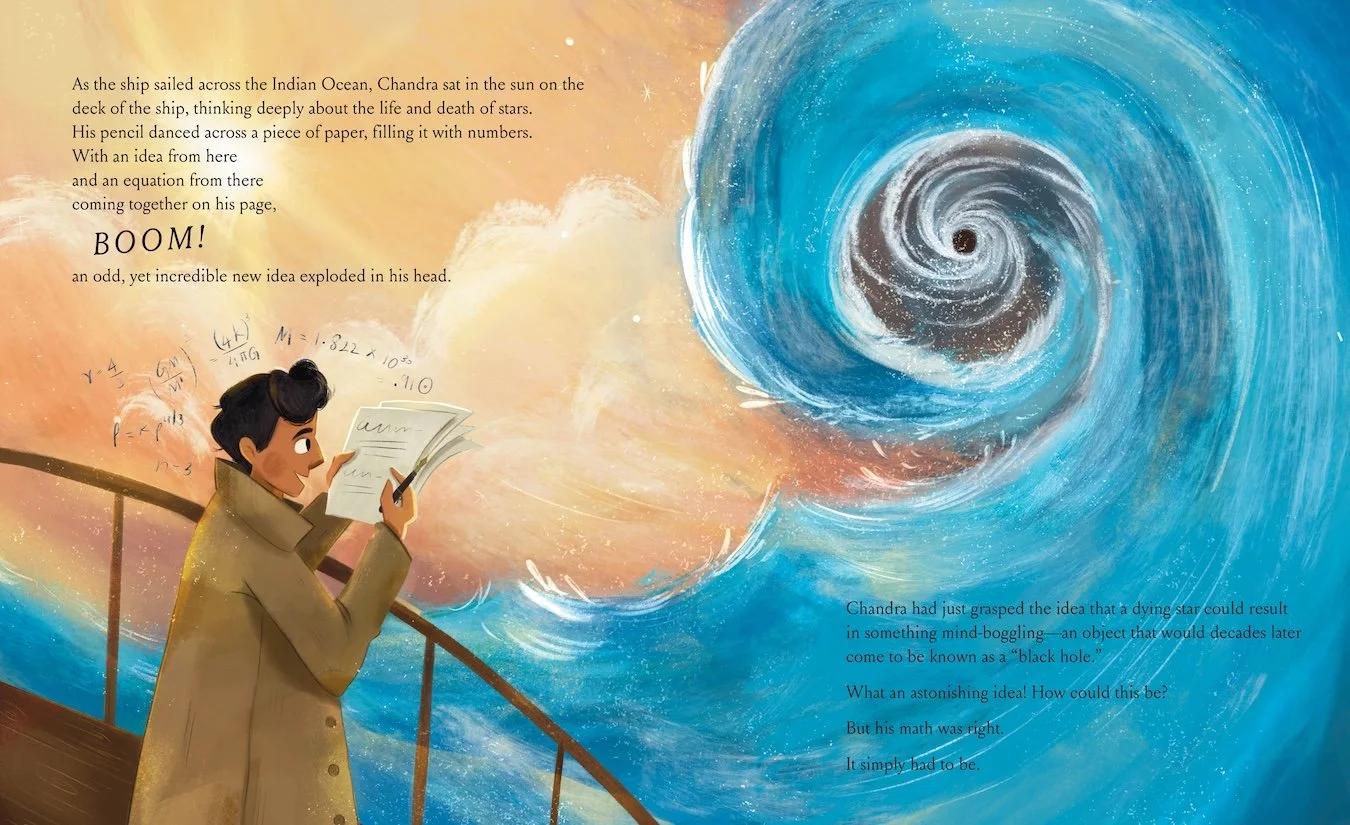
The manuscript still went through an R&R later, and then more edits after it was acquired, but by this time, I had a handle on it. And then my words were brought to life beyond my dreams by the illustrations of Srinidhi Srinivasan, and When Science Stood Still was born.
If I’d known how hard this journey was going to be, would I still have set out to write this story? Let’s just say I’m glad I hadn’t known.
[Uma adds] As for India in Triangles, maybe I’ll write about that another time because my one-time preoccupation with the story of the Great Arc of India led to an Everest obsession, which in turn led to Two at the Top, a sequence that goes to prove all is never lost.
Shruthi, thank you! I’m happy our writing paths intersect and overlap as they do. Let’s keep talking.