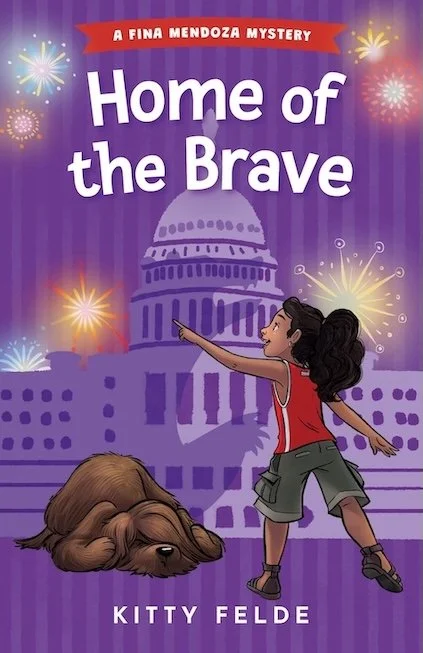
Kitty Felde says she used to explain government to grownups on National Public Radio and now she explains it to kids in books. Some years ago she wrote a middle grade novel about a 10-year old girl, Fina Mendoza who moves to Washington, DC with her first-term Congressman papa and her older sister Gabby. Welcome to Washington, Fina Mendoza, is a mystery mashed up with a family story with a generous side of Washington trivia and lashings of insight into, yes—how government works. The story involves a Washington Halloween legend, and it led to a series.
In State of the Union, a mysterious pooping bird sets off a wild Chickcharney (yes, look that one up!) chase that weaves its way through battles over immigration reform and questions about the right to protest. In Snake in the Grass, reptiles begin infesting Capitol Hill, in a funny, dramatic extended metaphor for the toxicity of partisan politics. Book 4, out this year, is Home of the Brave, in which Fina, now 11, is back in her Congressman father’s LA district, still alert and curious, still with a warm heart and an abiding sense of fairness.
My email exchange with Kitty Felde about the series ends up meandering through character, the Washington DC setting, giving kids agency, and lots more.
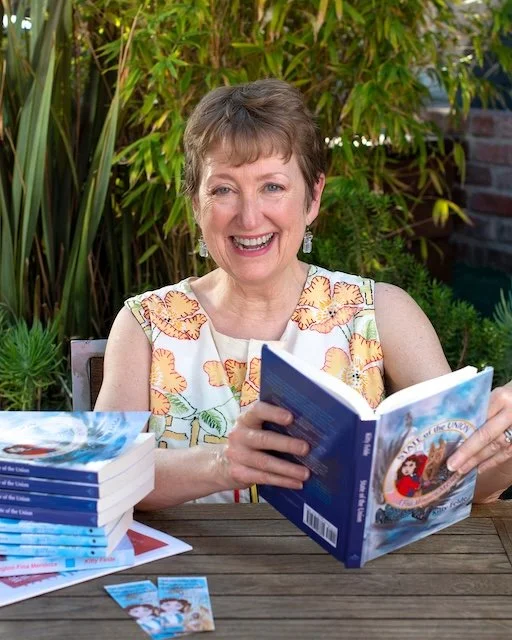
Kitty Felde. Photo © Emily Davis
[Uma] Your Fina Mendoza series began with Welcome to Washington, Fina Mendoza. What made you decide you had to write a book for children with this setting and in this particular wayr?
[Kitty] I've been a public radio journalist for three decades, explaining government to grownups. I realized how little our kids know about the way our government is supposed to work - particularly kids from the western United States who don't get that 8th grade trip to DC. I wanted to write a book that would create that trip to Washington.
[Uma] A virtual field trip, and Fina is the guide! How did you go about creating her first person narrative voice, which really establishes that sense of inviting readers along for the journey?
[Kitty] I have no idea where Fina's voice came from. She sprang complete to life when I started writing. I mean, I knew what her grown-up model sounded like, but this 10-year-old version had a completely different voice. Sometimes writing is magic: characters spring to life without you lifting a finger.
[Uma] That is magic especially when it leads to more work. Many keystrokes later, there’s a series. How did that happen?
[Kitty] It was so much fun spending time with Fina and her family and the dog Senator Something that I wanted to continue. One of my favorite nights of the year was the night of the State of the Union address, when the president goes down Pennsylvania Avenue to the Capitol. Members and cabinet secretaries and U.S. Supreme Court justices crowd into the House Chamber and you never know what will happen. (In my book, a bird poops on the president's head in the middle of the speech!)
[Uma] Fina’s a lively, engaging protagonist. Nothing is wasted on her, from George Washington’s face on the dollar bill to collective nouns to the subtext in Papa’s flyers. She has a generous heart as well as a quick mind. Tell me how this character came to life for you.
“Kids are our future! My mom took me door to door with her to get out the vote. We never ate grapes in support of the farmworkers’ union. Those experiences shaped my life.”
[Kitty] Years ago, I mentored a young girl. The program was designed to have us work with a high school student and help them get into college. I never knew Fina as a 10-year-old, but I could imagine her at that age - smart, determined, fearless - and I asked her whether I could name the character after her. She agreed. Today, she is a second grade teacher working on her PhD in education!
[Uma] What a wonderful story. Especially because young people live in a world that is not of their making, and for the most part, they don't have a lot of agency to influence it. Related to that—why is it important to you that young readers understand how government works--or perhaps, given the erratic times we live in, how it ought to work?
[Kitty] Kids are our future! My mom took me door to door with her to get out the vote. We never ate grapes in support of the farmworkers' union. Those experiences shaped my life. I want kids to escape the cynicism about government and grant them the agency to make a difference in their lives and in our country's future. To do that, they need to know the basics of our Constitution. Fina provides a sneaky way to get kids excited about civic engagement.
[Uma] In Home of the Brave, similarly reflecting the real world, we have fire and homelessness—real issues for Fina to come to terms with. What do you want young readers to take away from this book?
[Kitty] I want kids to see the world through Fina's compassionate eyes. I want them to see that there are some things that they can do now - years before they can vote - that can make a difference in their community. Kids are so optimistic! I want them to put that "can do" attitude to work, to help change the world.
[Uma] On a lighter note, I loved the regional, political, and historical trivia, from the fake dog security system to Andrew Jackson’s inauguration party! Tell me what has been the most fun for you about writing these books.
[Kitty] When I worked in Washington, I kept uncovering fun stories that had nothing to do with my job. Like: Washington has the ugliest shoes in America. So ugly, I created a twitter account called Shoes on the Hill where I would post pictures of ugly ugly shoes. When I came back to California, I ran out of people to tell these 'inside the Beltway' stories. They ended up in the Fina mysteries.
[Uma] You know, I will not be able to shake ugly shoes out of my mind for some time—thank you for that! Did you have to fictionalize these real events and observations or were they quirky enough to begin with? I guess I’m trying to get at how you take what life hands you and turn it into story, because we all do this in different ways.
[Kitty] I stuck to the facts. Once a reporter, always a reporter. I mean, I've never seen a Demon Cat (just the pawprints in the concrete outside the old Senate chamber) and a bird did not poop on the president during the State of the Union address (but a lot of members of Congress have misbehaved in years past) but the quirky things are real. They are what made DC so fascinating to me!
Uma] I would be remiss if I didn’t ask you to tell me about Senator Something—a brilliant name for a canine detective’s side-kick who can converse on the phone without saying a word. Where did that dog come from?
[Kitty] Ironically, I'm a cat person! And Senator Something is a heck of a lot smarter than any real life dog I've ever met. But Fina is new to Washington, without friends, and this huge orange French Briard is both her best friend and her detecting partner. He got his name on the page pretty much the same way he does in the book. I used "Senator Something" as a place holder. I'd come up with something more appropriate later. But just like in the book, Senator Something stuck!
[Uma] In your classroom visits, you prompt kids to speak up and speak out. Explain how that works.
[Kitty] I love classroom visits. We start by finding Washington, DC on a map. (Kids on the west coast ALWAYS point to the state above Oregon.) Then we identify the Capitol building (most kids think the president works there...) We talk about Fina and the Demon Cat (a story that is resurrected EVERY Halloween in DC) and end with each kid writing a pre-stamped postcard addressed to their member of Congress where kids ask the lawmaker to tackle one issue they think is important. (I call the office to make sure every kid gets a letter back. This makes a tangible connection between that child and their government. It's planting seeds of citizenship.)
Those of you who have come across my Book Uncle trilogy know how much I love middle grade readers, with their whimsical outlook, their open hearts, their keen sense of right and wrong. It feels as if my trio of characters in their unnamed South Indian city, could easily be in conversation with Kitty’s Fina. They live in the same complicated adult world, even if they’re at opposite ends of it. It’s a world that needs them to be engaged, to learn not only how it works, but how it ought to work.
A fifth Fina Mendoza title is due out in 2028.