Writing With a Broken Tusk

Writing With a Broken Tusk began in 2006 as a blog about overlapping geographies, personal and real-world, and writing books for children. Since March 2024, Jen Breach (writer, VCFA graduate, and former student) has helped me curate and manage guest posts and Process Talk pieces on this blog.
The blog name refers to the mythical pact between the poet Vyaasa and the Hindu elephant headed god Ganesha who was his scribe during the composition of the epic narrative, the Mahabharata. It also refers to my second published book, edited by the generous and brilliant Diantha Thorpe of Linnet Books/The Shoe String Press, published in 1996, acquired and republished by August House, now part of Reading Is Fundamental, and still miraculously in print.
Posts on this site reflect personal opinion and commentary protected under the Canadian Charter of Rights and Freedoms and the First Amendment of the US Constitution.
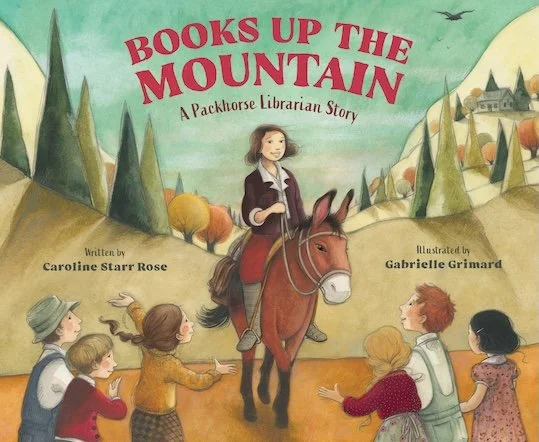
Process Talk: Caroline Starr Rose on Books Up the Mountain
A writing group is more than the sum of everyone in it. You share manuscripts at various stages of progress. Some fall by the wayside, others make it to completion. You celebrate successes and commiserate over the inevitable disappointments. You get to know one another and develop shorthands of communication that no one else understands. And every once in a while, you get to witness a story idea that the writer knows has arrived as a gift in her life and you are lucky that you are going to run alongside as she develops it.
Here’s one of those projects: Books Up the Mountain, a picture book by my friend and colleague Caroline Starr Rose, illustrated by Gabrielle Grimard. And here’s Caroline, e-chatting with me about the book.

Shape, Space and Scansion in Picture Book Text—Part 2
As a picture book writer who is not also an illustrator, I only have my mind to work with, so when people ask me how my process works, it’s easy to freeze, to default to not knowing. Not knowing makes me inclined to wonder if the art and craft of it all might be purely instinctive. Or worse, perhaps a fluke. So while I was looking at my own book, Look! Look! in this context, I thought I’d ask a couple of writers in my critique group (affectionately dubbed The Autodidacts) to weigh in: Vaunda Micheaux Nelson and Caroline Starr Rose.
I asked each of them to think about one of her picture books to find something that changed between the early draft and the final book.
Vaunda wrote about Almost to Freedom (2004 Coretta Scott King Illustrator Honor Book):
I was working on the final phase of Almost to Freedom. The story is historical — about a family trying to escape slavery — and I am always concerned about getting the history correct.

Guest Post: Caroline Starr Rose on The Burning Season
Stephen Pyne’s article in Scientific American compels and informs but it’s also surprisingly lyrical.
“Earth is a fire planet, the only one we know of. Earth has fire because it has life.”
Fire, Pyne says, is like a virus—not truly living but needing the living world to spread by contagion. We humans provided the one thing that naturally occurring fire does not have—ignition. And so it happens, he suggests, that we have created a new kind of earth, a planet on fire in a time he dubs the Pyrocene.
One thing writers do is bear witness. My very dear friend and colleague Caroline Starr Rose has done just that, with her middle grade novel, The Burning Season.
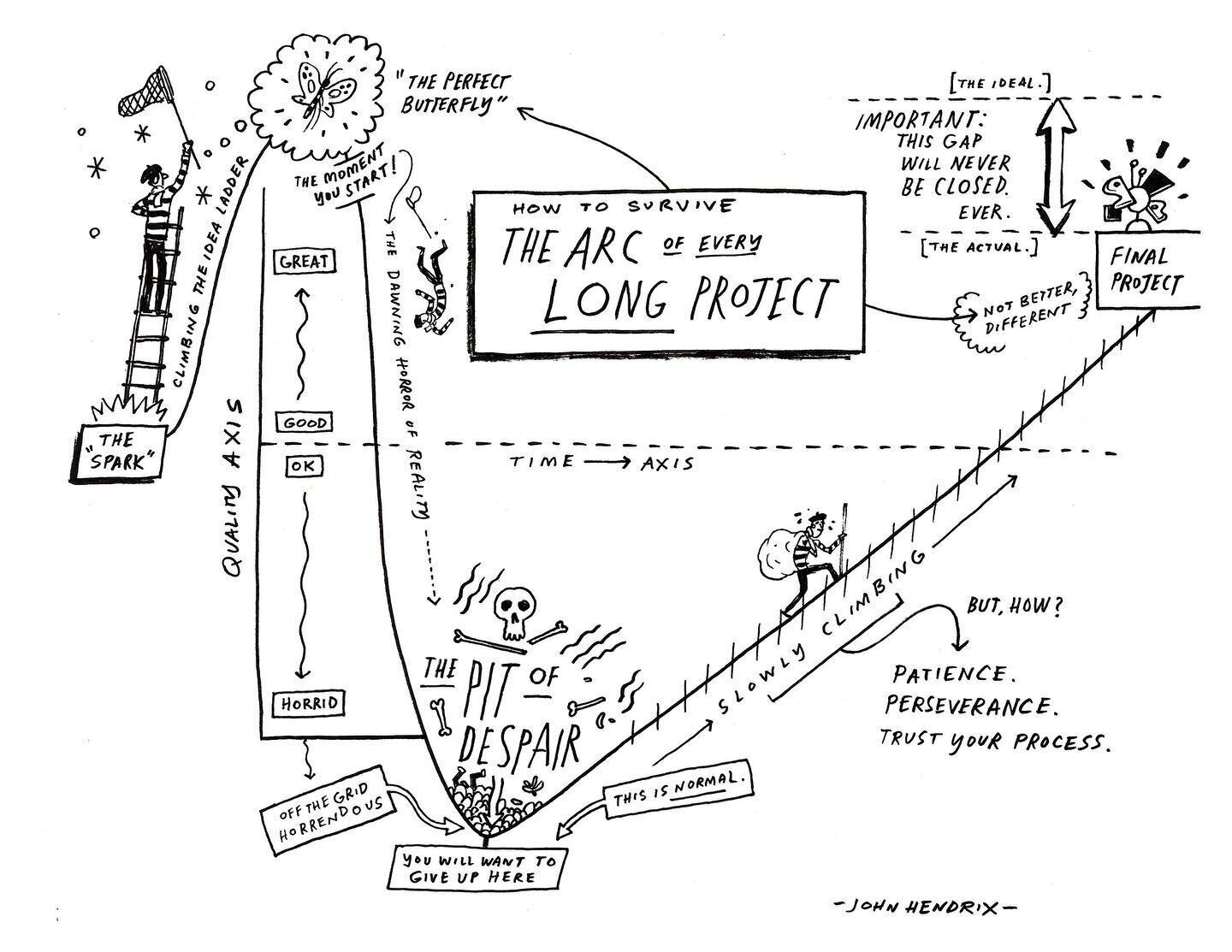
Visualizing the Long Project
Thank you to Caroline Starr Rose for letting me know about this marvelous graphic depiction of a process with which I am all too familiar, having been in "this writing business. Pencils and whatnot" for about thirty years now. Being the slow, plodding writer I am, stubbornly Poohish, I know all about the arc of the long project and have occasionally surprised myself retracing my own footsteps in search of Woozles, or could they be Grandfathers?