Writing With a Broken Tusk

Writing With a Broken Tusk began in 2006 as a blog about overlapping geographies, personal and real-world, and writing books for children. Since March 2024, Jen Breach (writer, VCFA graduate, and former student) has helped me curate and manage guest posts and Process Talk pieces on this blog.
The blog name refers to the mythical pact between the poet Vyaasa and the Hindu elephant headed god Ganesha who was his scribe during the composition of the epic narrative, the Mahabharata. It also refers to my second published book, edited by the generous and brilliant Diantha Thorpe of Linnet Books/The Shoe String Press, published in 1996, acquired and republished by August House, now part of Reading Is Fundamental, and still miraculously in print.
Posts on this site reflect personal opinion and commentary protected under the Canadian Charter of Rights and Freedoms and the First Amendment of the US Constitution.

Threads of Peace Bound Galleys!
Nothing like the arrival of a box of bound galleys on your doorstep to yank you out of reality and place you in the slow, unfathomable timeline of the book's creation.

Leda Schubert on Nathan's Song
Nathan, growing up in a shtetl in Russia, loves to sing. When he hears opera for the first time he is transfixed and longs to learn this kind of music. His family and community, including his little brother Samuel, gather money to pay for his passage to Italy. What happens next is a marvel of picture book writing. I talked to my friend and long-time writing colleague Leda Schubert about the choices she made in telling this story from her own family history in her new picture book, Nathan's Song.
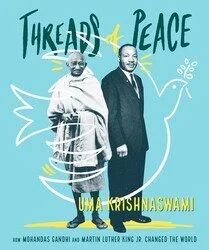
India and Black America
India and Black America have often been on intersecting paths, paths that have largely been ignored in the national discourses of both countries.
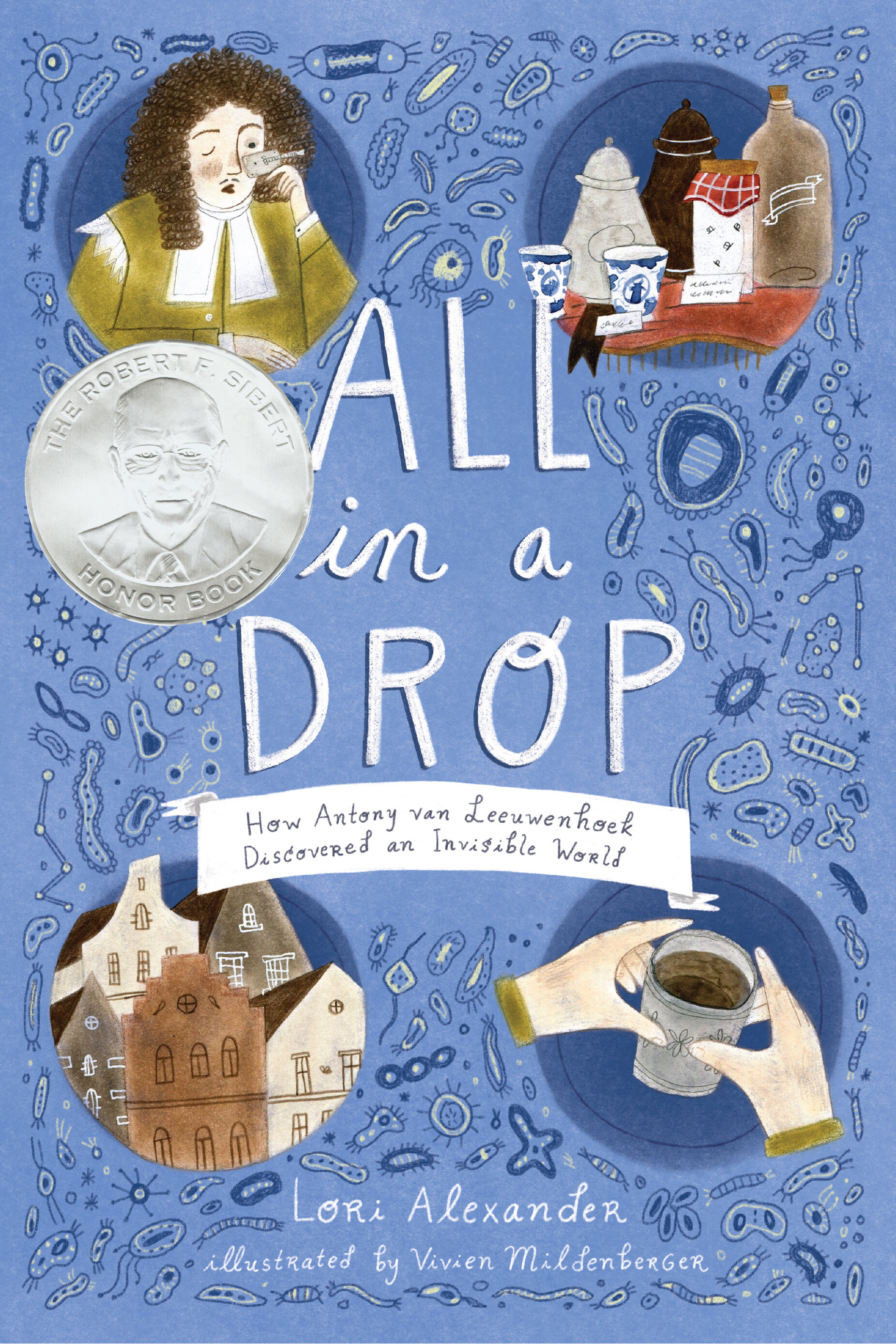
Invitation to the Invisible World
Long before our present-day preoccupation with invisible germs, Antony van Leeuwenhoek peered into a world of miniature life present in and around us.
Who We Really Are
Courtesy of the brilliant Maria Popova of Brain Pickings, here is poet Marie Howe’s reflection on humans and time and the big, big picture:

Childhood Book Memory
My son, on a trip to Rome, recently sent me this photo of a house that Hans Christian Andersen lived and wrote in during his year in Italy. What, I wondered, did he work on there from 1833 to 1834? One of his travelogues? It turns out it was his autobiographical novel, The Improvisatore, and the trip was sponsored by ad usus publicos, a Danish public fund set up in 1765 and used in the 1800s mainly to support literature, art and the sciences. In other words, this was a residency!