Writing With a Broken Tusk

Writing With a Broken Tusk began in 2006 as a blog about overlapping geographies, personal and real-world, and writing books for children. Since March 2024, Jen Breach (writer, VCFA graduate, and former student) has helped me curate and manage guest posts and Process Talk pieces on this blog.
The blog name refers to the mythical pact between the poet Vyaasa and the Hindu elephant headed god Ganesha who was his scribe during the composition of the epic narrative, the Mahabharata. It also refers to my second published book, edited by the generous and brilliant Diantha Thorpe of Linnet Books/The Shoe String Press, published in 1996, acquired and republished by August House, now part of Reading Is Fundamental, and still miraculously in print.
Posts on this site reflect personal opinion and commentary protected under the Canadian Charter of Rights and Freedoms and the First Amendment of the US Constitution.
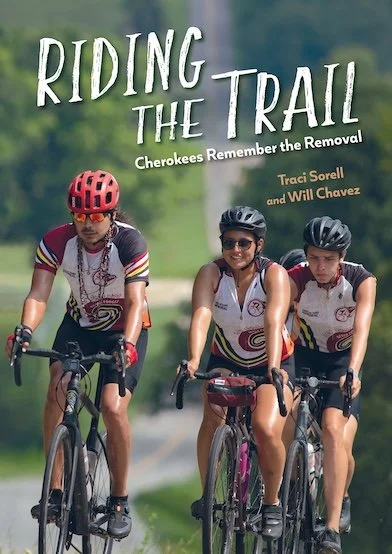
Process Talk: Traci Sorell on Riding the Trail
Riding the Trail: Cherokees Remember the Removal by Traci Sorell and Will Chavez is a tribute to history and the present, at once honoring ancestral tragedy and present-day community. When a Cherokee Nation biking team gathers to replicate a ride that took place in 1984, retracing one of the routes of the Cherokee forced removal of 1838-39, it’s a journey that unlocks the past in body and soul and spirit.
Traci Sorell, I’m so delighted to e-chat with you about this vibrant book, packed with information and illustrated with maps, original documents, art, and photographs.
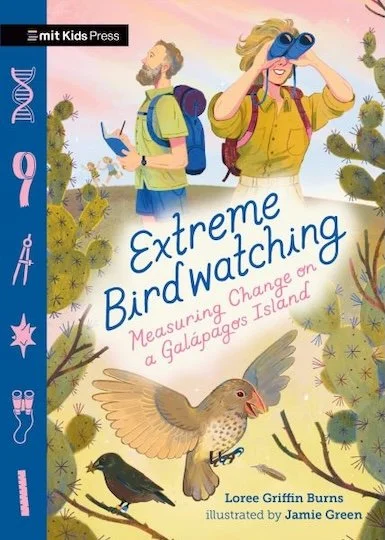
Guest Post: Loree Griffin Burns on Extreme Birdwatching
In Extreme Birdwatching: Measuring Change on a Galapagos Island, Loree Griffin Burns zooms in on a single island from the famed archipelago. Welcome to Daphne, not the kind of island you might go to for a beach vacation—no sandy beaches or resorts or even shade, and its volcanic crater is home to thousands of nesting blue-footed boobies:
For all these reasons, most people who visit this part of the world sail right past Daphne. But there are an unusually determined and curious few who’ve stopped, who’ve gone ashore, and who’ve seen astonishing things there.
This is the story of those people. Even more, it’s the story of those astonishing things.
Loree’s book is packed with information as it traces Peter and Rosemary Grant’s four-year study of the finches on Daphne Island. They studied hundreds of birds twice each year, precisely measuring their beaks, wings, and bodies, banding them, and recording the entire process. Illustrated by Jamie Green, this book is also filled with a clear affection for those “astonishing things” that abound on the island and for the people, no less admirable, who study them.
Loree writes here about using the power of story to persuade, writing through the human complications of opposing beliefs, and toward understanding.
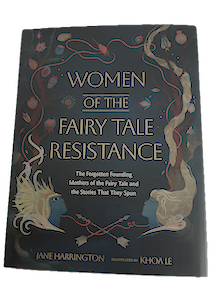
“Not a Fairy Tale.” Women of the Fairy Tale Resistance by Jane Harrington
From the moment I first heard of Women of the Fairy Tale Resistance by Jane Harrington, I was intrigued. It’s a compendium of stories by the group of women in the subtitle: “the forgotten founding mothers of the fairy tale.”
Founding mothers? How come I’d never heard of them? Think of the fairy tale in the Western world and one naturally thinks of Charles Perrault, right? And after him, the Brothers Grimm. And later Hans Christian Andersen. Not a founding mother in sight. That is the assumption Harrington takes aim at.
Of her book, Jane Harrington wrote in The Orange & Bee substack:
It’s an interwoven work of biographies and stories, featuring seven of the conteuses—Marie-Catherine d’Aulnoy, Charlotte-Rose de La Force, Henriette-Julie de Murat, Marie-Jeanne L’Héritier, Catherine Bernard, Catherine Durand, and Louise d’Auneuil—who together wrote more than seventy tales while bravely pushing against the homophobic, misogynistic, ultra-conservative reign of Louis XIV. These histories, though necessarily brief (erasure was real, and there’s only so much that can be recovered), are deeply researched yet conveyed not in an academic tone but in a conversational voice, something these salon writers favored in their own writing.

Ancient knowledge meets science in Our Green Heart: The Soul and Science of Forests by Diana Beresford-Kroeger
In Our Green Heart: The Soul and Science of Forests, botanist, biochemist, biologist, and poet Diana Beresford-Kroeger challenges us all to explore the deep connections that forests offer us. Here’s a scientist who listens to trees and in this book she opens up her life and experience in brief, lively chapters—her childhood, her personal arboretum where she nurtures rare and endangered species, navigating the contradictions and commonalities in old wisdom and new science.
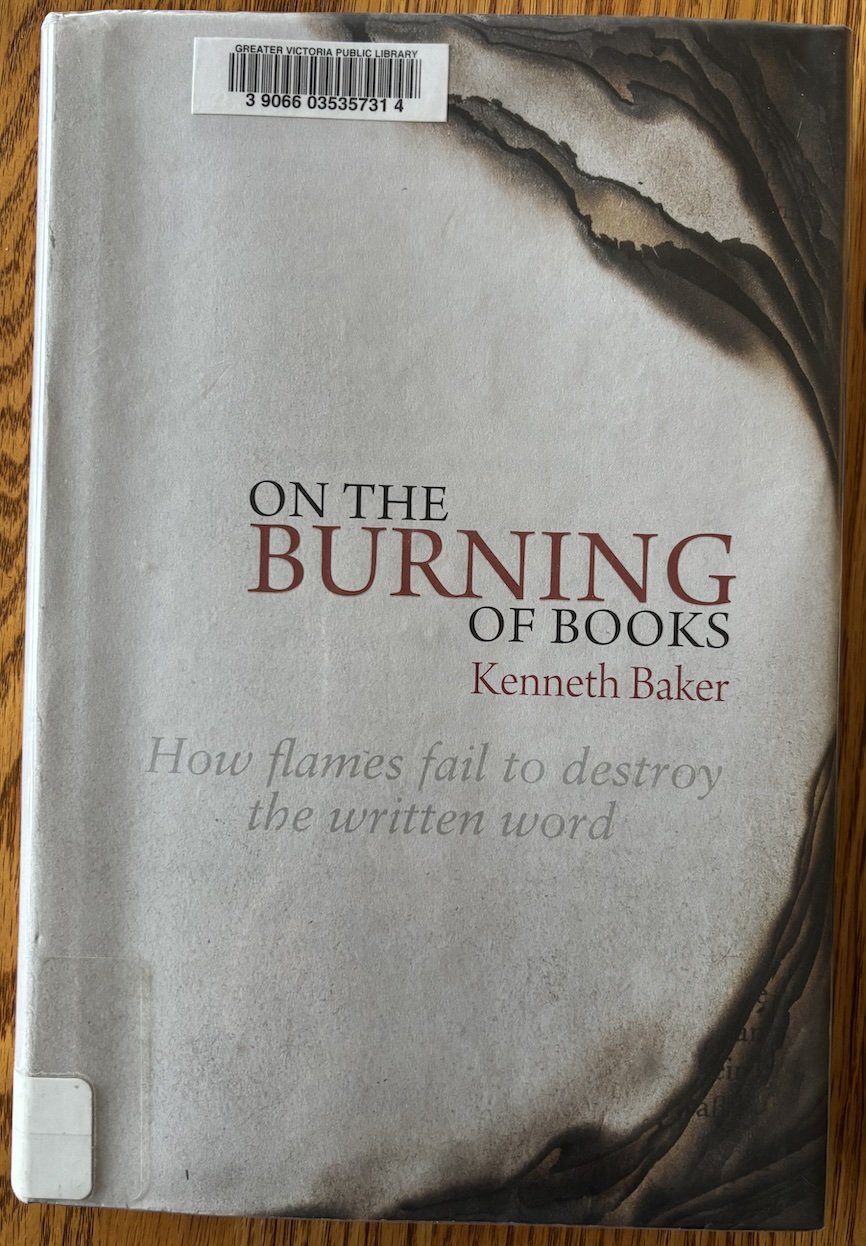
On the Burning of Books: Kenneth Baker’s Illustrated History of Book Burning
The subtitle of Kenneth Baker’s gorgeously illustrated history of book burning across histories and geographies carries a lyrical note of hope:
How flames fail to destroy the written word.
Breathe that in. I hope it’s true.
In our age of division and conflict, in a time when so many people around the world are retreating into their own little corners of religion and ethnicity and ideology, I read this book looking for the long view.
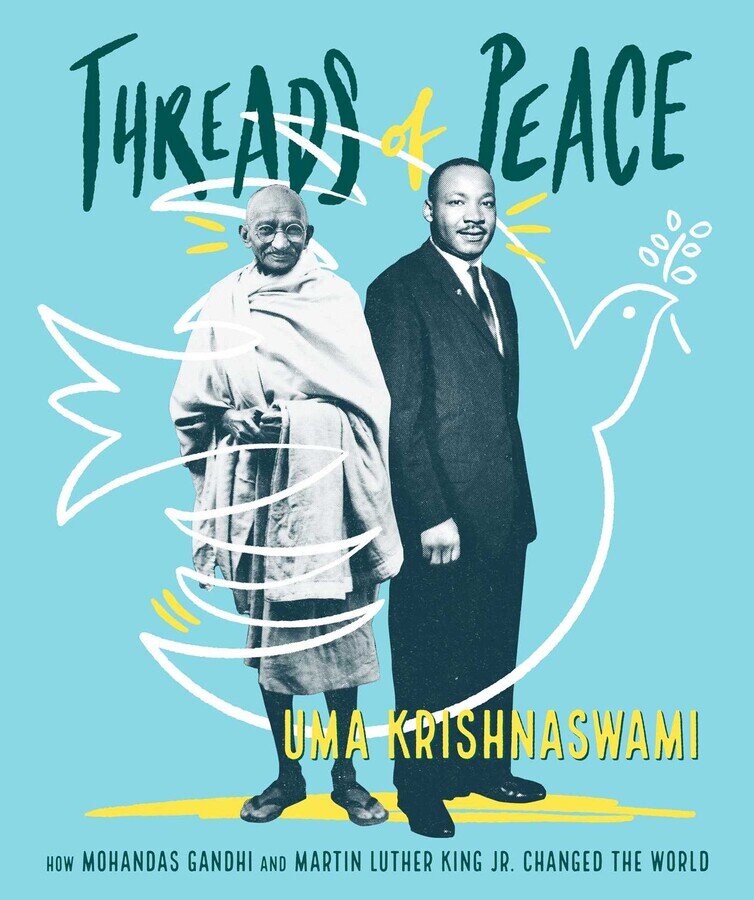
Remembering Dr. King Today and Often
Abraham Lincoln warned of “crowned-kings, money-kings, and land-kings” opting instead to create a government of the people, for the people, by the people, a phrase so ordinary for us today that it no longer seems to call for quotation marks. Yet those kings of the material world are in seats of extraordinary power today. Their presence will be writ large in the extravagant and highly politicized presidential inauguration taking place in the United States. Yet, purely by the chance arrangement of the Gregorian calendar, that event, with all the hoopla surrounding it, happens to coincide with Martin Luther King, Jr. Day. That’s my focus today. Another kind of King.
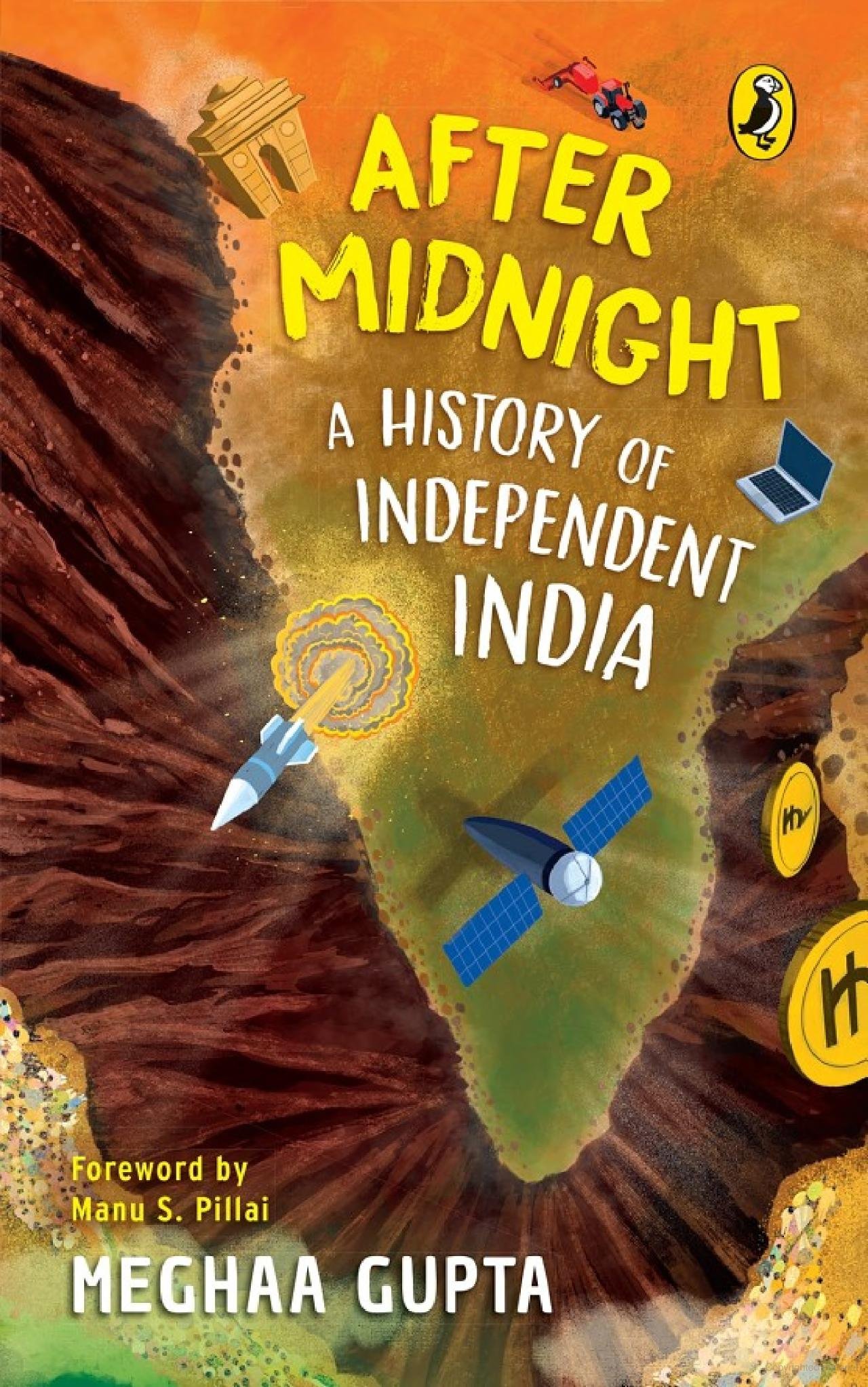
Process Talk: India’s History Through the Lens of After Midnight by Meghaa Gupta
We are all aftermath to the people who went before us, whether we knew them or not, whether they could even imagine us, whatever they might think of us and what we have become. We create for ourselves the story of who they were, and with our lives we write the next chapter. And because we’re in the middle of present-day events, we can’t see how they will build into history.
That is why, in the context of August 15, 2024, India’s 77th Independence Day, we take a longer view of India’s history through the lens of Meghaa Gupta’s nonfiction book, After Midnight: A History of Independent India (Puffin India, 2022) in which she seeks to “contextualize the challenges of the present with the past and make greater sense of the times we live in.”
I asked Meghaa how a book about the past can shed light on the present.
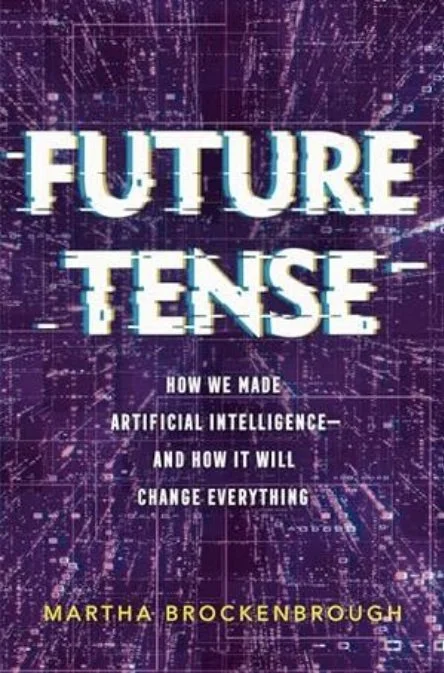
Process Talk with Jen: Martha Brockenbrough on Human and Artificial Intelligence
[Posted by Jen Breach for Writing With a Broken Tusk]
Martha Brockenbrough is a writer of very considerable brain. An example: her acknowledgements for Future Tense: How We Made Artificial Intelligence–and How it Will Change Everything (out today from Feiwel & Friends) are couched in a conversation with ChatGPT, in which Martha teaches the AI exactly how many people it takes to make a book. “‘Given all the work that goes into a book,’” she asks it, “‘and all the human beings required to do that work, do you still think [a book can be written] in six months to a year?’ ChatGPT was silent for a long time. And then this reply appeared, in red type: ‘An error occurred. If the issue persists, please contact us through our help center.’”

Caveat Auctor
When John Zubrzycki’s history of Indian magic was published in 2018, Michael Dirda of The Washington Post wrote a grumpy review with a scattering of admiration. Dirda’s criticism cited typos, misspellings, garbled sentences, redundancies—in other words, slovenly editing
Here’s a grudgingly admiring snippet, the annoyance aimed at the publisher, Oxford University Press:
Oxford’s delinquency is particularly annoying because Zubrzycki, an expert on South Asian history, clearly worked hard to produce what is, despite its textual irritations, a valuable and entertaining book.
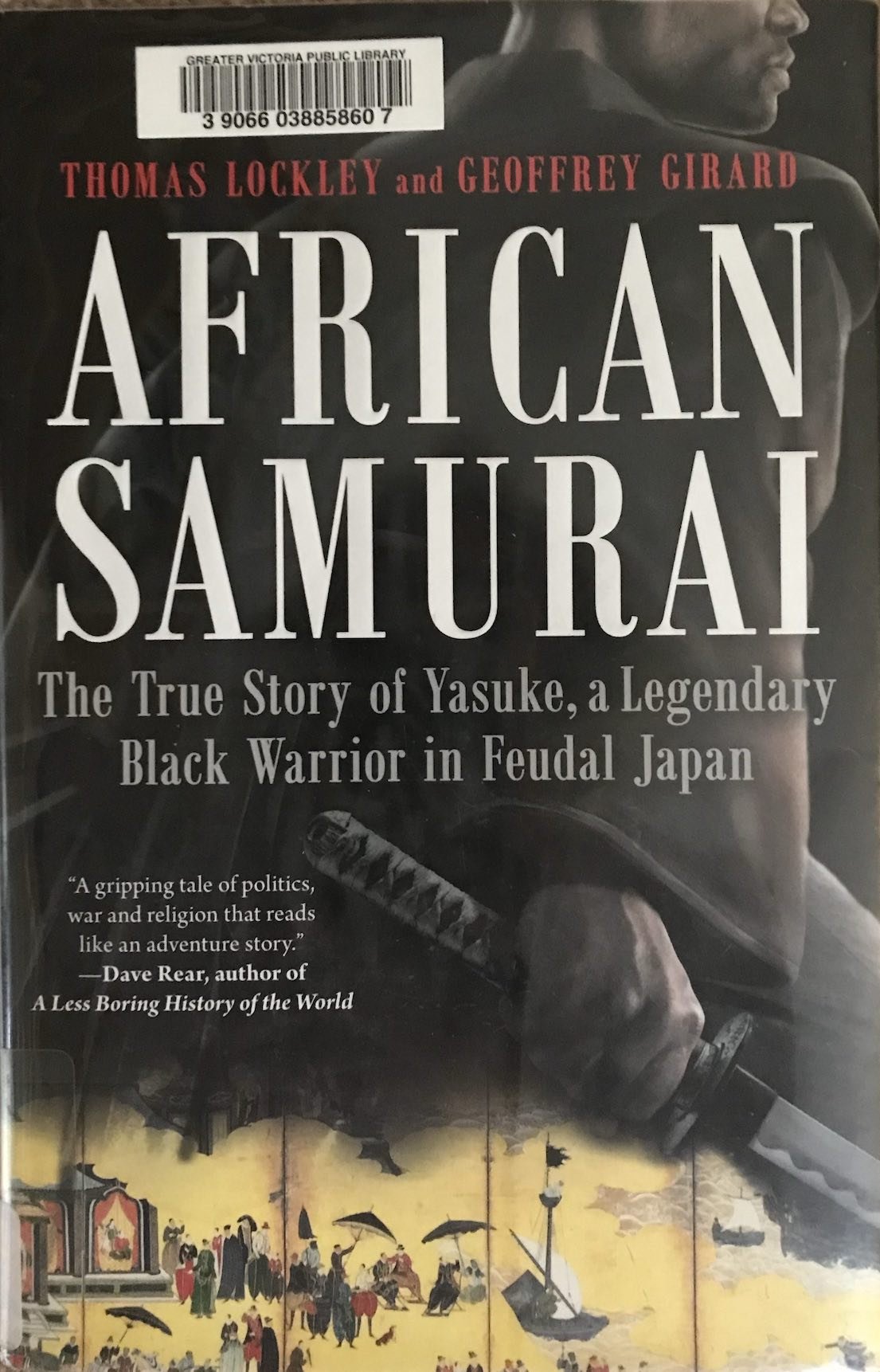
Histories No One Taught Me: the Story of Yasuke, African Samurai
African Samurai: The True Story of Yasuke, a Legendary Black Warrior in Feudal Japan by Thomas Lockley and Geoffrey Girard is a deep dive into the story of a little-known historical figure: an enslaved man from East Africa transported by the Portuguese to Japan, left behind there with a Jesuit mission. He came to be known as Yasuke, and fought alongside feudal lord Odo Nobunaga to become Japan’s first foreign-born samurai.
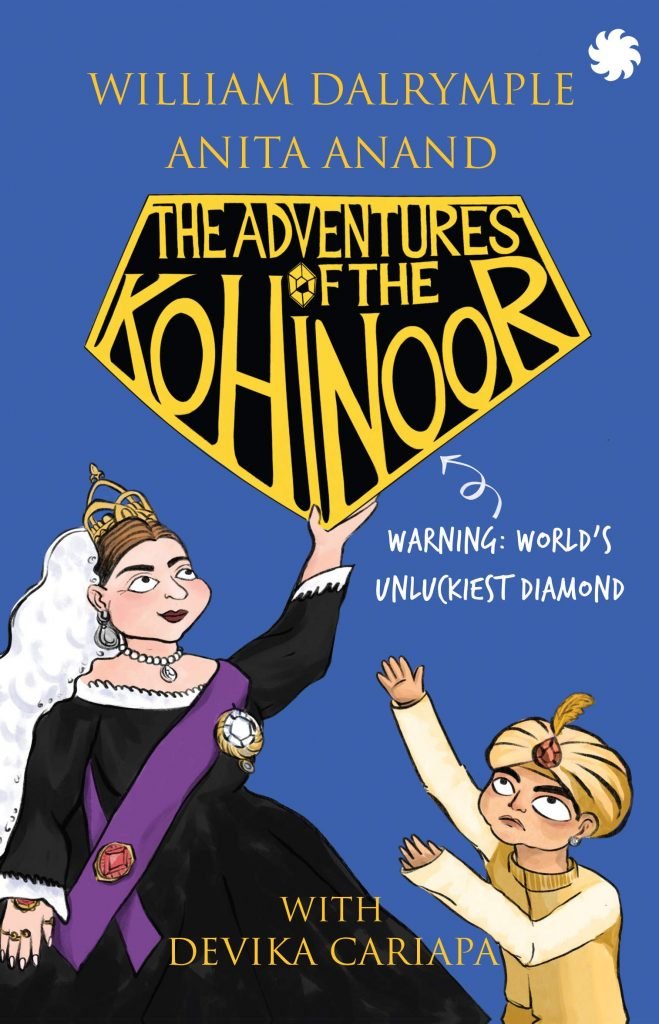
Warning: World’s Unluckiest Diamond
I have long been a fan of William Dalrymple’s books. I very much enjoyed reading the authoritative and wide-ranging history he co-authored a few years ago with Anita Anand, Koh-I-Noor: The History of the World’s Most Infamous Diamond.
I wondered at the time if a book for children might some day be drawn from this material. It seemed like an obvious reach and something likely to fuel middle-grade curiosity.
Now, here it is.


Guam, Past and Present
With Earth Day appoaching, on my reading list is The Properties of Perpetual Light, a new book by Julian Aguon, founder of Blue Ocean Law, an international law firm based in Guam, specializing in human and indigenous rights, self-determination, and environmental justice in the Pacific. The book addresses the history of colonization and militarization of Guam — and how Indigenous people have resisted U.S. influence.
India and Black America
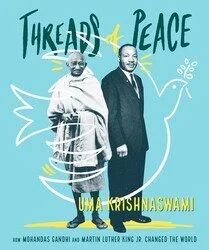
India and Black America have often been on intersecting paths, paths that have largely been ignored in the national discourses of both countries.