Giving Thanks: A Reflection on Public Funding of the Arts
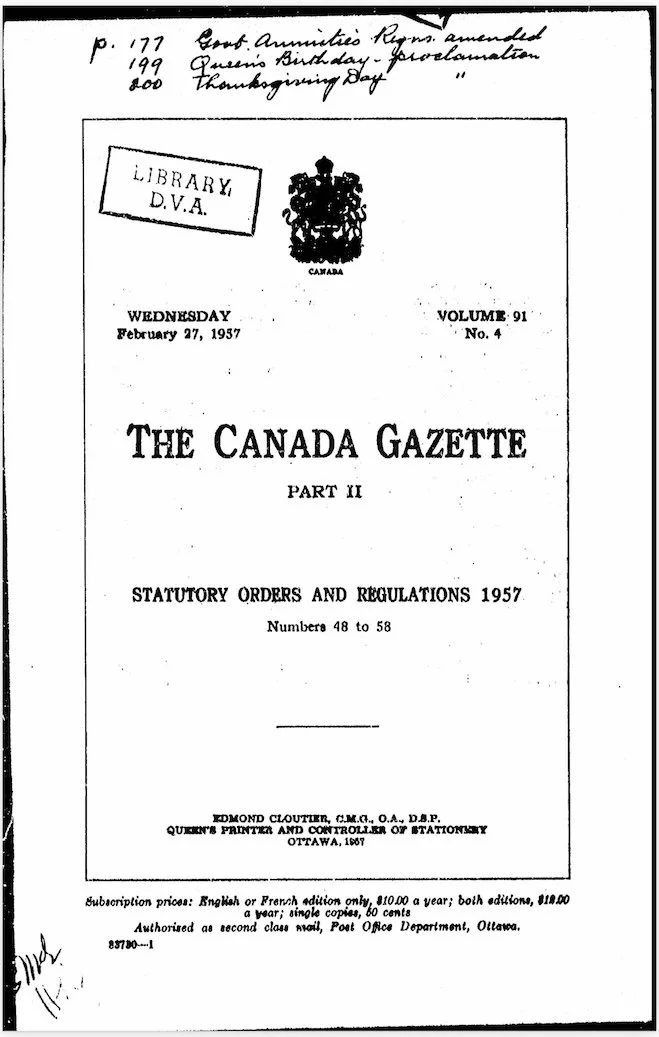
Next Monday is Canadian Thanksgiving Day, a national holiday since 1879. It’s observed now on the second Monday in October, a date affirmed in 1957 so as not to conflict with November 11, Remembrance Day—a case of one holiday shuffling aside to make room for another. Canadian Thanksgiving is a bit lower-key than its southern counterpart but it’s also a time to focus on gratitude. It is equally loaded with conflicting origin stories—Martin Frobisher arriving in Nunavut vs. Indigenous gratitude and harvest traditions predating European settlement. Because Christmas is still so far off, there’s no real post-Thanksgiving shopping craze. Here we sprint from Halloween to Christmas. For South Asian Canadians, Diwali, Gurpurab and Ramadan fall variably across this calendar. Gratitude gets its nod a month earlier.
All of which makes this a good time to think about my own particular reason to give thanks.
This year, I did something I have never done before. I applied for a government grant to support a writing project. During the thirty-odd years I lived in the United States, I’d written or helped write several grant applications: to the U.S. Department of Education for a special education teacher training program at the University of Maryland, to AAUW for school presentations in western Maryland, to National Writing Project to fund a site in Farmington, NM, to New Mexico Arts to run workshops with children at Aztec Ruins National Monument. But never had I described a work in progress in order to ask for funding that could buy me the time to write it.

Oh, Canada! I couldn’t believe my ears when I heard about the grants offered by Canada Council for the Arts to support artistic creation. To advance, nurture, and celebrate Canadian arts and literature? To encourage diverse voices and help artistic, including literary, communities to thrive? And really, this midlist dweller on the edge of the continent was eligible to apply?
“It was the best ten days’ work I’ve done in a long time. It left me empowered, feeling as if I were indeed capable of doing this thing that had been haunting and daunting me for months. ”
I talked to a writer friend who assured me I should give it a go. So I took my work in progress, a verse novel I had held close to my heart for a couple of years already, but which had so far turned out only superficial beginnings. Writing the grant application, I brought the project onto the page. Not the thing itself. Not the novel, but my thinking about it.
I wrote about what I was planning to do, my artistic rationale, why I thought I was the one to write this book, why it felt inescapable, why I thought it mattered at this time, how it would contribute to my artistic development, what broader social issues the work addressed. Not a single item had anything to do with submission, publishing plans, marketing, sales. It all spoke to the work itself, to why it should exist. I took ten days to work on that grant application. It forced me to back away from words, lines, stanzas and to think instead about essential questions, trajectory, the yearning of the protagonist, the roles of secondary characters. It made me list the books I’d read (and written) that had led me to this novel. It made me project a time-frame for it, give myself deadlines, make them realistic, examine my own capacity to do this work and think about where I’d need help getting it done.
It was the best ten days’ work I’ve done in a long time. It left me empowered, feeling as if I were indeed capable of doing this thing that had been haunting and daunting me for months. Even if I didn't get the grant, I told myself, this planning and projecting was worth the effort.
The Council informed me this summer, in a suitably official automated email, that my grant application had been approved. Apart from getting to work (which I have, trust me. I’ve been cranking out a poem a day ever since, and am now nearing the end of a not-half-bad working draft) they want recipients to spread the word.
In this post, among other things, I’m doing just that.

I acknowledge the support of the Canada Council for the Arts. (Oh, do I ever!)
Or, in the interest of Canadian bilingualism:
Je remercie le Conseil des arts du Canada de son soutien. (I’m really hoping that verb conjugation is correct!)
Seriously…here’s a snippet of text from the Council web site:
If you’ve received a grant from the Canada Council for the Arts, we want you to share this news. An acknowledgement of our support is a testament to the calibre of your work. It also helps us demonstrate the public value of the arts and arts funding.
The year 1957, when Thanksgiving in Canada stopped moving around the calendar and found a home on the second Monday in October, was also the year that the Canada Council for the Arts was established. It funded 29 grant recipients. In 2024–25, 5,305 artists, groups and organizations received grants. It’s not perfect. Artists and arts organizations often function on a financial knife-edge. But it’s a commitment, nonetheless. The Council’s vision, they say, “is one where the arts are thriving in all parts of Canada and on the world stage, to the full cultural, social and economic benefit of people across the country.” And there we are, writers, listed among a host of other artists and arts workers.
I’m among those writers who are periodically plagued by self-doubt. I’ms are there are super-confident ones who aren’t beleaguered in this way, but that is not me. Writing projects, especially ambitious ones, with experimental form and content, sometimes feel in danger of wearing thin midway, fragmenting and losing energy or becoming overloaded with good intentions. I have a reasonable body of published work and lots of unfinished pieces, including a few mentally tagged should-I-ever-have-begun-this and oh-thank-heavens-this-one-got-rejected. I knew I didn’t want this novel to weaken and die. I knew I’d regret it if I didn't get it done.
I also know that this book will not be an exact realization of my vision for it. No work ever is. It will go where each incremental step I take leads it, or where each iteration of it leads me. But this grant is an enormous vote of confidence in my capacity to make it real. It’s the kind of tacit endorsement that opens up room to experiment, to try new ways, to play. It let courage and joy in the door.
Appropriately for this Thanksgiving season, I’m deeply grateful.