Hell, No, Don’t Go: Canadian Stories (and American Avoidance) of Vietnam War Resistance
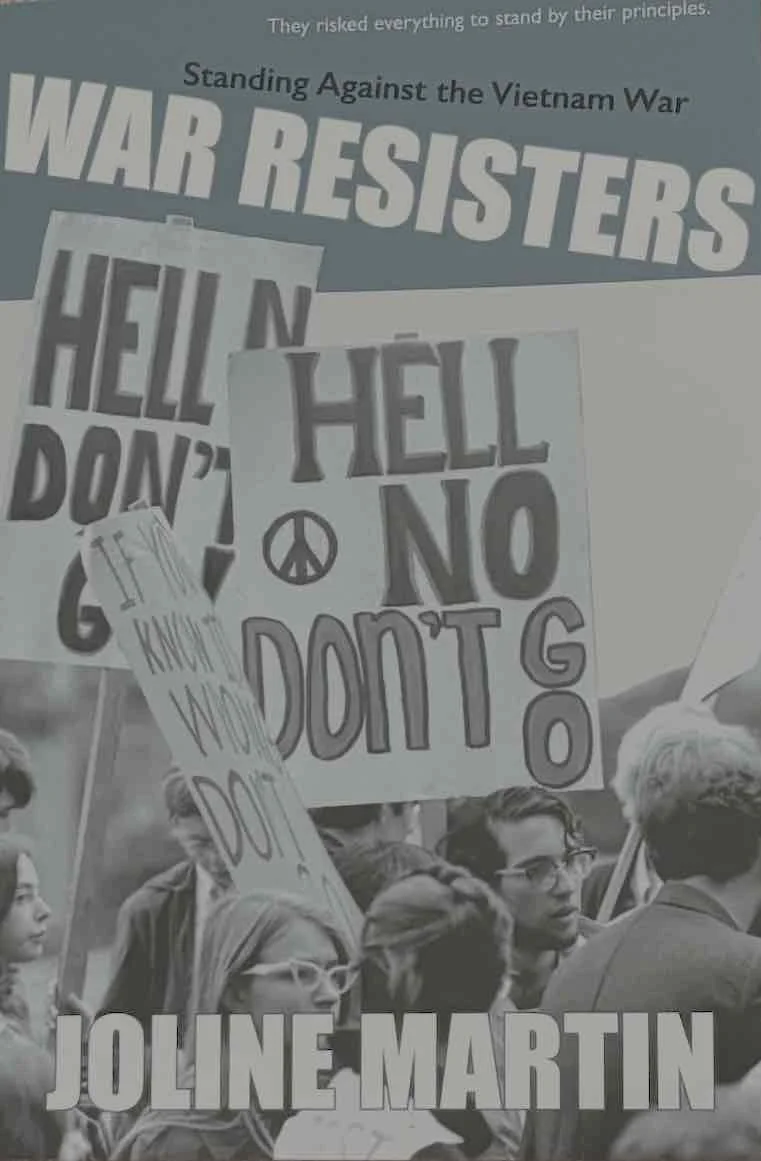
As we near the 51st anniversary of the fall of Saigon, marking the end of the Vietnam War (known in Vietnam as the American War) we find ourselves looking into the abyss of the war with Iran. This one’s been declared by an American president for reasons at best unclear, at worst whimsical and thoughtless. It makes more sense than ever to look back upon that 20th century war with two names.
Last year, I attended a talk by Joline Martin about her nonfiction book, War Resisters: Standing Against the Vietnam War. The book offers a contemporary perspective on the struggles and triumphs of the American Vietnam war resisters who crossed the border into Canada and settled on Vancouver Island in British Columbia. They are an invisible minority and Martin’s book sheds light on how it felt for them to leave friends and families. She recounts the compassion they encountered, the hurdles they overcame, the heartache that resulted from their life-changing decisions, and what they contributed over the years to their new home.
Here’s an excerpt:
As a young man straight out of high school, Norm attended a University of California satellite campus, majoring in chemistry. There he met a radical professor, considered by some a communist, who introduced him to current ideas in sociology and a poet by the name of Thomas Hardy. One poem of Hardy's, "The Man He Killed" made a deep impression on Norm.
And another:
“We had a feeling of being rats leaving a sinking ship," was how Valerie described her and Greg's reason to leave the US. Many compounding factors had led to their decision, starting with the escalation of the Vietnam war, the pressure from the draft board, the assassinations of Bobby Kennedy and Martin Luther King, the election of Richard Nixon to the presidency. The list was endless.
And one more:
When the pro war bumper sticker "America, Love it or Leave It" appeared on vehicles throughout the country, the message was obvious. The whole thing seemed pretty simple to Steve. He saw his choices clearly as "black and white." Steve would kill no one, so he had two choices: "jail or leave." Steve chose the latter.
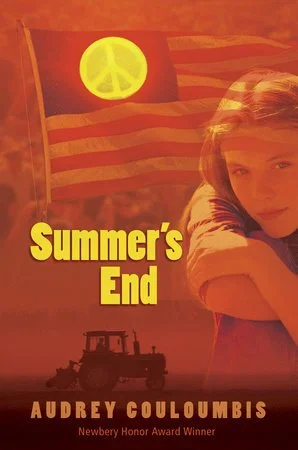
The talk, and Joline Martin’s book, made me think about a middle grade novel, Summer’s End, that my friend Audrey Couloumbis wrote over twenty years ago on this subject. On Grace’s thirteenth birthday, her brother Collin torches his draft card. Grace starts out without much of an opinion on the raging war:
I figured if Collin got home pretty soon, there’d be the big fight and then the storm would blow over.
But when Daddy throws Collin out for rejecting that invitation to serve his country, the rifts in Grace’s family make the war impossible to escape. Audrey explores the dynamics of the loyalties that can tear a family apart. When war demands that we choose between loves. who are we supposed to love more—our children or our countries?

This blog has featured a couple of posts about novels by Canadian writers on the subject of war resisters. In Dodger Boy by Sarah Ellis, the resister is a tenderly rendered character, a young man seeking to define himself against the backdrop of the war unfolding far away. The book is full of little asides about Jane Austen and Dickens. It explores the borderlands of American-Canadian crossovers and divides, as well as the logic and flaws of misremembering.
Amanda Lewis, author of YA novel, Focus. Click. Wind., wrote:
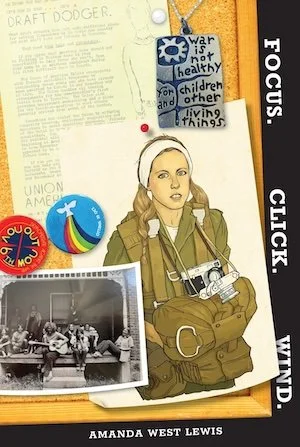
The challenge of writing historical fiction is to create the mesh of a tapestry that weaves the generations together. It’s a tapestry of three dimensions –– past, present and future –– one that gives us the opportunity to improve our chance of survival. And maybe, just maybe, as we write we’re giving young people some skills to make the world a better place.
Given that Audrey’s book was published twenty years ago, I looked for other novels published in the United States that feature war resisters or draft dodgers—interesting characters, surely, taking troubled action in a fractured time. Even after all these years, those actions arouse strong emotions—whether we see these people as cowards or as principled individuals depends less on them than on us, the readers. Isn’t that the stuff of fiction?
So I tried to find even one more trade book for young readers. I couldn’t. If you know of one, tell me.
Judith B. Walzer discusses the problems inherent in books about a war that still evokes those lingering residues of guilt and shame, blame and anger. How do we represent for young readers a history that has clawed its way into the present during a political period that threatens to destroy our children’s future?