Process Talk: Claire Hatcher-Smith on The Mizzy Mysteries
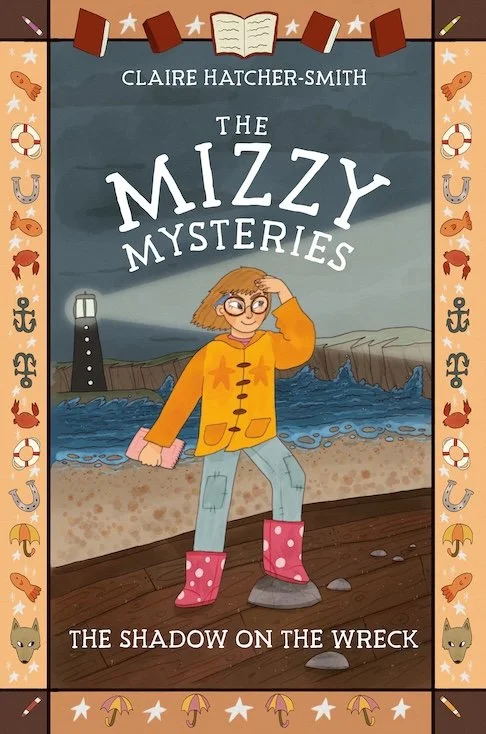
Claire Hatcher-Smith’s middle-grade protagonist, Mizzy Maypole, is a kid with a purpose—she dreams of being a detective, and nothing’s going to stop her. In the first book in the series, A Skeleton in the Closet, Mizzy discovers an elderly relative’s diaries in a locked wardrobe and is off and running in short order, in pursuit of clues to what appears to be a most suspicious death. Now, “Mizzy the Marvelous” is back in The Shadow on the Wreck. She’s investigating a spooky shadow on the wreck of an old fishing boat, only her cousins are doing some investigating of their own and they don't seem to want her help. Mizzy’s a lovable, quirky PI character, and the books trip along at a nice pace in her first person voice, an enjoyable ride from determination to despair and back again, and always with a dash of good humour. Here’s my interview with Claire about where this character came from, the settings in these books, and more.
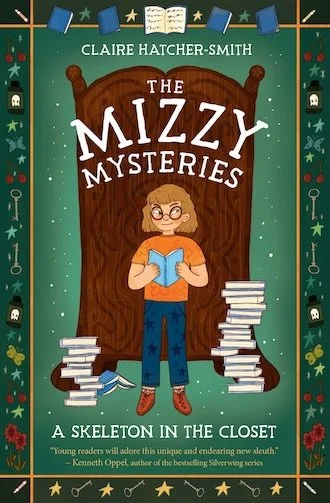
[Uma] Mizzy is a natural sleuth, and she also has Down syndrome. It’s a part of her but it doesn't define her. The importance of this framing is evident in how you establish this character and her interior life. Can you tell me what led you to create Mizzy's character in the way you have?
[Claire] I have worked as a speech and language pathologist (SLP) since 1989, both in the UK and in Canada, specializing with neurodivergent tweens and teens. Down syndrome (DS) is such a visible difference, with marked similarities (although people with DS actually look more like their families than each other) and society tends to assume that people with DS all act the same too. There are such entrenched stereotypes, both positive and negative, but all limiting the way in which an individual is perceived. In my work as an SLP I have had my expectations of what children with DS are capable of smashed on an almost daily basis and, with Mizzy, I wanted to play with these preconceptions. To show that Mizzy has DS, for sure, but that she is so much more as well. Fiction provides such an opportunity for empathy and I chose the risk of a first person voice as I wanted the reader to have no choice but to put themselves in Mizzy’s shoes. Most of all I wanted to give all the kids I’ve worked with a chance to see themselves (and to be seen) as the star of the story.
[Uma] Both London and country settings and now the seaside setting of The Shadow on the Wreck, come to quirky life through Mizzy’s observant eyes, quick impulses, and breezy imagination. Writers come at setting in all kinds of ways. What’s your approach to creating the varied settings in these books?
[Claire] Ah, I draw very heavily on places I know and love, especially the ones which are unique in some way. Hampstead Heath and the Ladies Pond was a special part of my life in the late 1990s and the natural setting in the midst of London seemed like a perfect setting for a dark secret…
“ ...the investigative process and vocabulary, especially combined with the maverick, detective trope, felt like a fun but powerful metaphor for pushing my empathy agenda and nudging us all to look a little more closely at other people and interrogate our own judgements.”
St Jude’s on Sea is based on a little British seaside town where I spent a lot of childhood holidays. The marsh and the shingle spit at Dungeness, with the looming black lighthouse and the abandoned fishing boats battered by the wind and the tides, lent itself easily to a spooky, mysterious setting for Mizzy’s second case.
The exception to drawing on my own experience of places is the village of St Jude’s Junction where Mizzy’s cousins live. As Mizzy Maypole is a riff on Miss Marple, I thought she should spend at least a little time in an alternate St Mary Mead!
For all the settings though, as you noted, I take a few liberties with reality and filter the setting through Mizzy’s perspective and what is important to her heart and her head and her investigation.
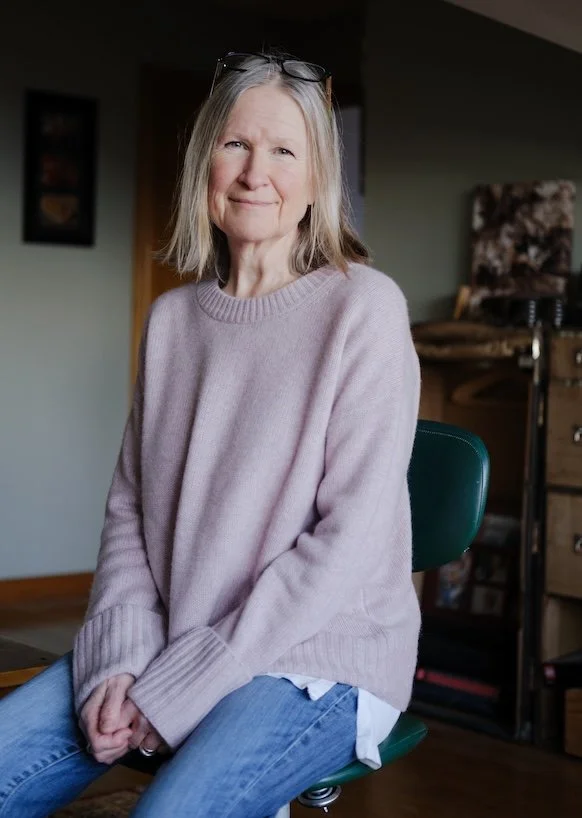
Claire Hatcher-Smith: Photo © Railay Fawkes
[Uma] Children live in the world that adults have made and they are not oblivious to it. In The Shadow on the Wreck, you take on issues and attitudes related to migration and in particular, the arrival of refugees. What made this subplot important to include?
[Claire] Oh my gosh, I could not NOT write about this. I find the increasing anti-immigrant feeling in so many societies horrific and sickening. Mizzy is all about compassion and inclusion and empathy, about seeing people as individuals, and resisting the pressure to jump to negative conclusions about anyone before you get to know them. Mizzy’s second investigation is my attempt to share my beliefs via Mizzy’s growing understanding that most people are more than they appear to be on the surface.
[Uma] While the focus is on Mizzy and the particular mystery she’s solving, the novels simultaneously serve up a few gentle pokes at the genre itself, its expectations of procedure and order and so on. A twist at the end of A Skeleton in the Closet is reminiscent of the finest PI characters who see the humanity in the mysteries they puzzle out and both books contain references to the Scott and Bailey series and to Sherlock Holmes. Can you tell me how the Mizzy stories follow genre conventions and where (and maybe why?) they depart from them?
[Claire] Well, thank you! I am a lifelong Agatha Christie fan, an avid watcher of British detective shows, so I’m very much shaped by both. I’m also always drawn to less conventional heroes. I was looking for a story for my character with DS to star in and, one day while I was driving to work, Miss Marple just landed in my lap and refused to budge. The unsuspected amateur sleuth trope seemed a perfect fit for Mizzy.
As for Scott and Bailey, I was a HUGE Charlie’s Angels fan in my tweens (before I discovered British detectives and Sally Wainright!), so I simply swapped out Sabrina for Rachel Bailey. In the same way I had to learn to be me, I wanted Mizzy’s journey to reflect her gaining inspiration from her idol, but also gradually letting go.
In addition, the investigative process and vocabulary, especially combined with the maverick, detective trope, felt like a fun but powerful metaphor for pushing my empathy agenda and nudging us all to look a little more closely at other people and interrogate our own judgements.
[Uma] Anything else you’d like to say to readers of these warm, funny books?
[Claire] Thank you so much, Uma, for not only reading Mizzy’s investigations, but also for these thoughtful and insightful questions. I suppose the only thing left to add is that, as an SLP, a parent and an author, I am passionate about representation, inclusion of all kinds. My biggest hope for Mizzy was to boost empathy and understanding in general and specifically to be part of increasing and extending society’s understanding of DS. Although I have a lot of experience working with people with DS, I was very nervous about writing in the first person voice. The full-hearted support from the DS community, on both sides of the Atlantic, as well as India, has been overwhelmingly enthusiastic and reassuring. The next step is to pass this voice back to people with DS. I’m currently collaborating on a project with Mizzy’s wonderful audiobook narrator, Poppy Barrett, who is a talented and prolific writer. Watch this space!
[Uma] A series with the promise of more. Mizzy would probably say, “If you’ve heard any whispers, please don’t tell.” Or maybe do tell, because really, there’s something “fizzy with happiness” about these books.