Writing With a Broken Tusk

Writing With a Broken Tusk began in 2006 as a blog about overlapping geographies, personal and real-world, and writing books for children. Since March 2024, Jen Breach (writer, VCFA graduate, and former student) has helped me curate and manage guest posts and Process Talk pieces on this blog.
The blog name refers to the mythical pact between the poet Vyaasa and the Hindu elephant headed god Ganesha who was his scribe during the composition of the epic narrative, the Mahabharata. It also refers to my second published book, edited by the generous and brilliant Diantha Thorpe of Linnet Books/The Shoe String Press, published in 1996, acquired and republished by August House, now part of Reading Is Fundamental, and still miraculously in print.
Posts on this site reflect personal opinion and commentary protected under the Canadian Charter of Rights and Freedoms and the First Amendment of the US Constitution.
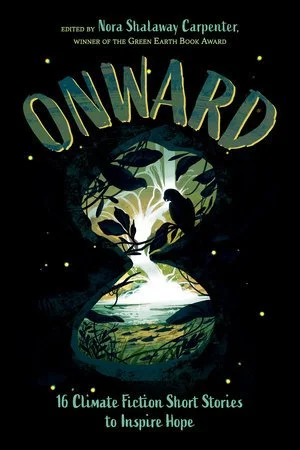
Guest Post: Nora Shalaway Carpenter on Curating and Editing the Climate Fiction Anthology, Onward
Nora Shalaway Carpenter (my former student, I’m proud to say) has edited a fine array of climate-centered short stories in a new anthology, Onward: 16 Climate Fiction Short Stories to Inspire Hope. In the foreword Nora writes about the vulnerability of the next reading generation, dubbed “Gen Dread” for the understandable anxiety they express at growing up in a world increasingly beset by climate devastation and disasters. Yet we are still human, together on the only planet that is currently our home. That's the overwhelming message in these stories.
Each piece advances the theme in a different way. Seeds carry the impossible eluctation of hope in a devastated world (“The Care and Feeding of Mother” by Erin Entrada Kelly). You can travel to the farthest place from humanity on the planet, and be surprised (“Graveyard for the Sky” by Aleese Lin). A shocking turn in an election for class president (“The Manatee is Not a Meme” by Gloria Muñoz) leads to an impulsive gesture of commitment. For a kid hauling trash on a lakeshore beach (“Blue Glass by Anuradha D. Rajurkar) guilt is isolating and personal but redemption shows up in connection. Settling into resentful teenage (“A Trashy Love Story” by Sarah Aronson), a girl is jolted into seeing who she was, and who she might become. Most of the stories are in prose, with two in verse. Together, they reach into uncertainty, perhaps into time itself, like the protagonist of Rachel Hylton’s sensitive, elegant contribution, “The Stealth Arborist.”
Nora sees bringing an anthology into being as a process akin to building community. Here’s her reflection on the creation of this book.
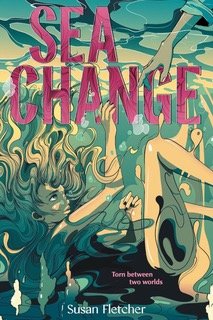
Process Talk: Susan Fletcher on Sea Change
Susan Fletcher is no stranger to my bookshelf, to my circle of writer friends and colleagues, or, for that matter, to this blog. I’ve been enchanted by her Journey of the Pale Bear, by the luminous setting and the endearing band of waifs in Falcon in the Glass, and by the spirited character of Marjan in Shadow Spinner. Her Dragon Chronicles (Dragon’s Milk, Flight of the Dragon Kyn, Sign of the Dove, and Ancient, Strange, and Lovely) play out over a timespan that stretches from a Welsh-inspired storyscape all the way to the thump of an egg and the life of a girl in Oregon, in a polluted present time.
Now Susan brings us Sea Change, a reworking of the story of The Little Mermaid. It’s a YA science fiction tale of a gill-breathing girl contending with family and community and love on a climate-impacted Texas coast.
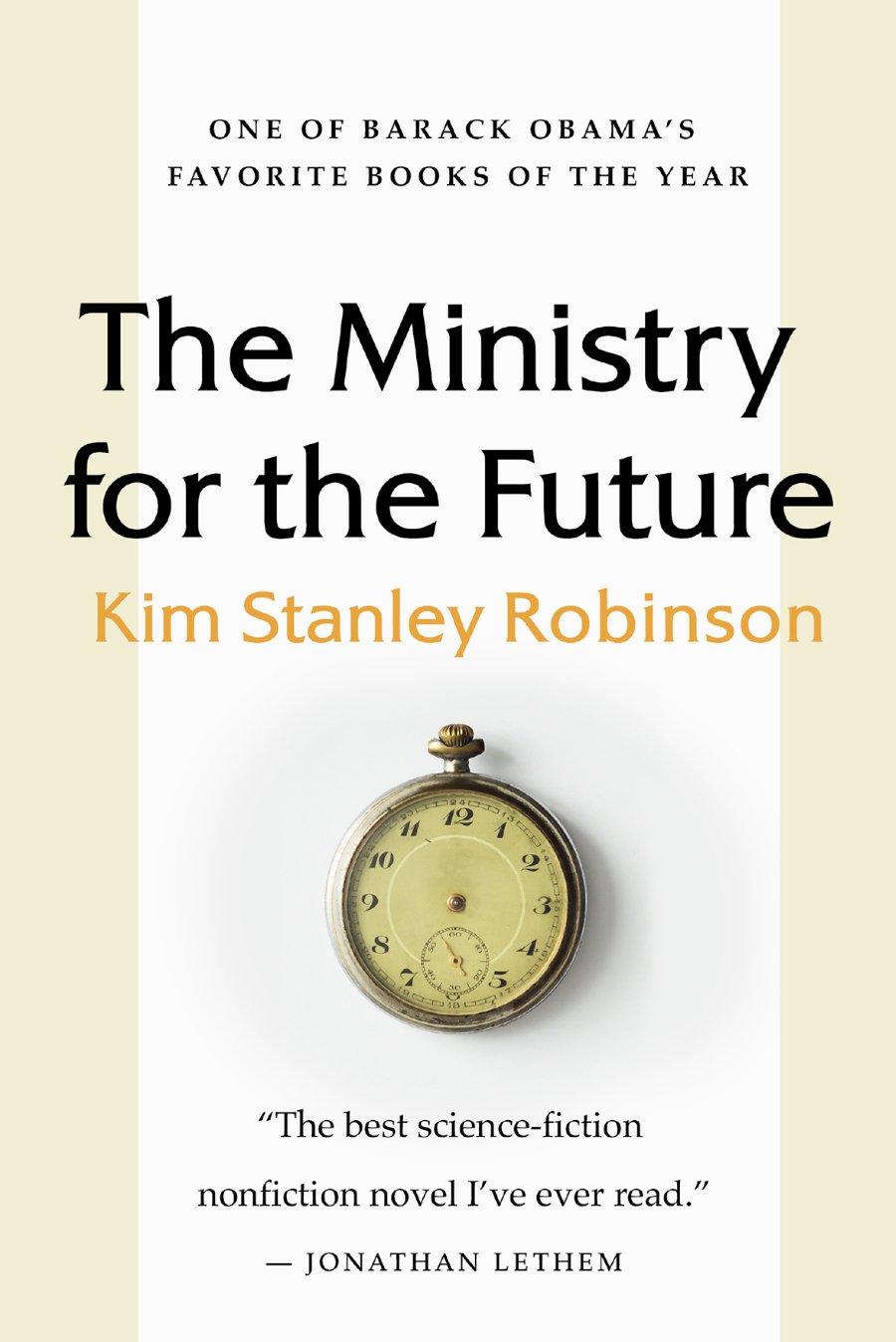
Reading the Future in Situ
Not for the first time, I’m wondering if it was a good idea to read Kim Stanley Robinson’s The Ministry for the Future while visiting India. In the book, the temperature hits 42° C in Delhi (that’s over 107° F). The protagonist, working for an NGO, persuades the locals to go dip in a lake, which turns out to be hellishly warm and dreadfully polluted.
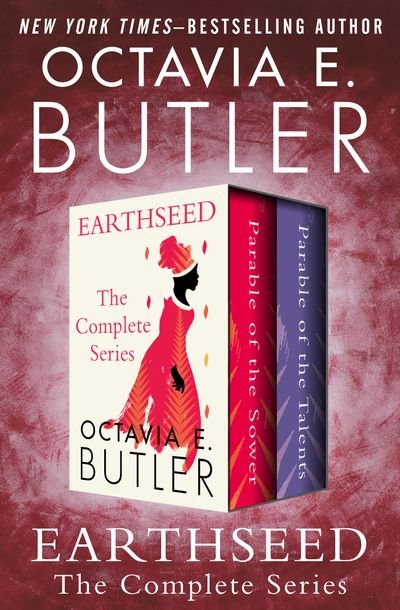
Rereading Earthseed in a Time of Planetary Change
Whatever I happen to be working on, I usually find myself needing an antidote in my reading, something that works against the grain of the writing.
Being in the depths of nonfiction at the moment, I needed to read fiction. But I wanted to read fiction that was capable of speaking to reality in the way that Richard Power’s Overstory did for me.
That is why I find myself rereading Octavia Butler’s iconic Earthseed novels, Parable of the Sower and Parable of the Talents.

Who Will Speak for Trees? The Overstory by Richard Powers
Why begin a new year with thoughts of the end of the world as we know it? Because human voices have spoken enough untruths, it seems right to hand at least some of our narrative over to those we have always assumed to be silent.
Trees speak in this novel, which seems fitting, since in the real world we refuse to give them voices.

Imagine 2200: Cli-fi Short Story Contest
Environmental nonprofit news outlet Grist’s solutions lab, Fix, has launched a new climate-fiction short story contest. Imagine 2200 calls for stories (3,000–5,000 words) that envision the next 180 years of equitable climate progress.