Process Talk: Meera Subramanian and Danica Novgorodoff
Around us, storms are storming, droughts are droughting, ice is melting. Polar bears and whales are doing their best to adapt, while we’re whizzing toward tipping points at great speed. Mostly I want to duck and hide but there’s nowhere to hide. Meanwhile, the oil and gas industry’s trying to get as much of its product out of the ground as fast as it can, when it knew perfectly well, decades ago, that this was coming.
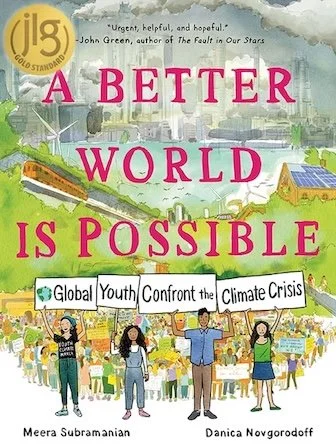
As always, swirling news about the planet and us resolve into a single question for me: what do we tell young people? What can we say that will help them cope with effects whose scope we are only now beginning to understand? If you wanted an answer that is appealing and humane, vivid and thoughtful, clear and compassionate, here it is—A Better World is Possible: Global Youth Confront the Climate Crisis by Meera Subramanian and Danica Novgorodoff. I asked them if they’d tell me about making this book. Here’s our e-mail exchange.
[Uma] There are so many threads here—indigenous stewardship of the land, the facts about climate change, its quickening progression, the way in which we talk about it, our complicated and often clumsy efforts to cope, the role of religion, science, writing, advocacy, resistance, and so much more. How did you decide on whose stories you needed to weave together in order to make this vast body of material come to life?
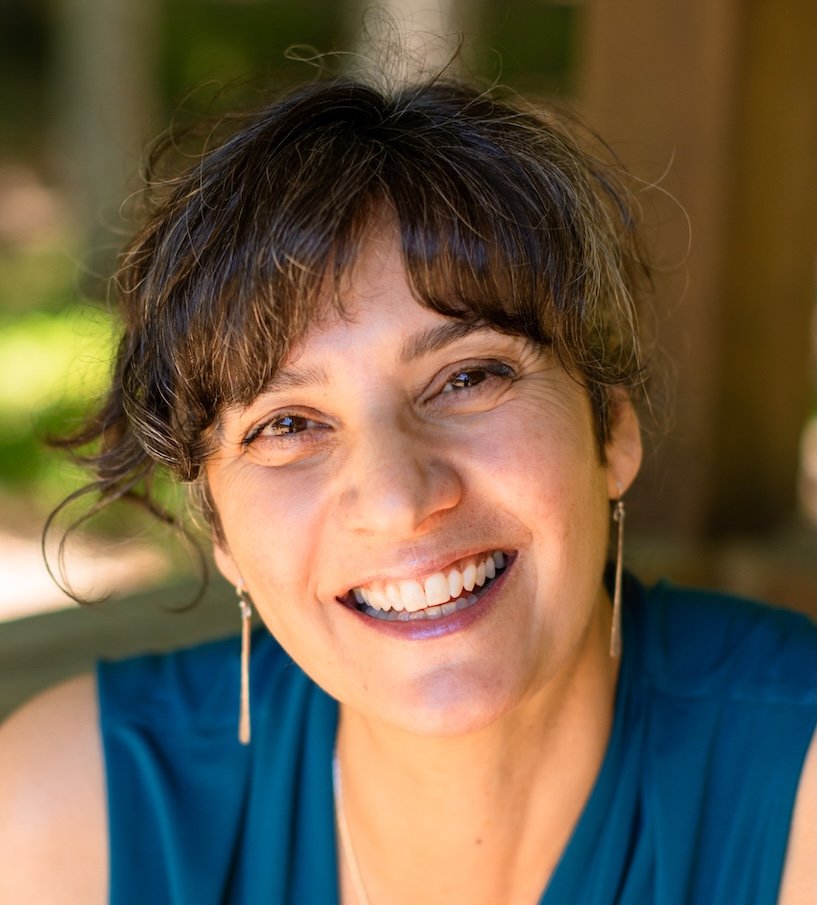
Meera Subramanian/photo © CC Boyle Photography
[Meera] As a narrative journalist who has covered science and the environment for 20 years, I recognize how intricately linked all these different elements are in telling the story of the climate crisis. Stories inform our world and our lives. You can't talk about climate just as a scientific problem because the reasons why humans are burning so many fossil fuels is based on political and economic structures such as capitalism and colonialism. And religion plays a role because it offers people a powerful lens to see the world. But those are all big abstract ideas. In order to make stories resonate, we knew we needed to look at individual lives so we centered the story around one particular action: the climate strike of 2019, likely the world’s largest climate protest, which Danica attended with her baby. We tightened our lens on four of the youth who helped organize the event. By learning what forces shaped their young lives, we found our way into a much larger story. The brief interludes that show up throughout the book offer readers a chance to contextualize what it means to care for the planet, and why we should.
[Uma] Was this always, in your mind, a graphic novel? How much did it change from your initial visualization to its present form?
[Meera] This was truly Danica’s vision. Back in 2020, I bumped into her at a mutual friend’s book event in Brooklyn. I’d long-admired her art, and when I asked what she was up to, she told me she was working on a YA graphic novel about climate change, but she was struggling with the writing. Her first attempts felt like a textbook, she told me. “I do narrative!” I said impulsively. “Let’s talk!” As the pandemic locked us all down, we continued our conversation remotely and she brought me on to take the lead on a manuscript that she would illustrate. It’s been a wholly collaborative process, which has been such a joy for me, who usually writes in isolation once I’m done reporting a story.
[Uma] Danica, you’ve written and illustrated picture books and graphic novels across the age range, including illustrating the amazing Long Way Down by Jason Reynolds. What drew you to this project?
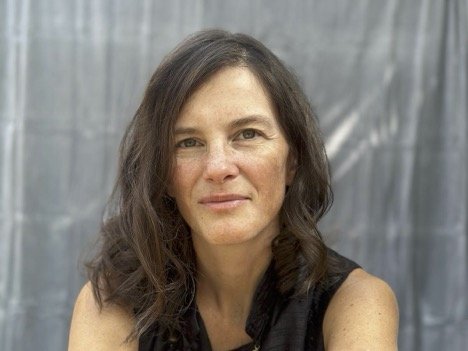
Danica Novgorodoff/Photo ©Jonathan Farmer
[Danica] I started thinking about this project about ten years ago. I had written and drawn a graphic essay on ecotourism in South America, and wanted to curate a book of essays by various artists on climate and conservation. That project gradually morphed into this one, a more unified story about climate activism and the science, politics, and cultural factors behind the climate crisis. I have always been obsessed with stories about people and nature, and as I began to learn more about the climate crisis I hoped to create a book that explained this very complex and heavy topic in an accessible and visually engaging way.
[Uma] Meera, what’s different about writing for young readers?
[Meera] This was all new for me! But I often take complex scientific stories and aim to write them in a way that makes them accessible to people, so I guess maybe this wasn’t so different after all. I brought my rigorous research skills to the project, and had the help of fact-checkers as well, and then I tried to get to the heart of the matter so it was easily digestible. Understanding climate change can be daunting, no matter your age, and I actually hope that even though the book is marketed to a young adult audience, that readers of every age can learn from it.
[Uma] What’s different about writing a script for a graphic narrative?
[Meera] I’m always thinking about scenes for stories, which often come from what I’ve experienced while out in the field reporting. Here, I drew from the events of the climate strike in New York, and interviews with the four climate youth we feature. I had ideas for images floating around in my head as I wrote what was essentially a screenplay, (which is so different from my usually long complex sentences!), but then it was Danica’s brilliant skill as an artist that brought it all to life.
[Uma] I want to say that Danica’s art throws magic dust over the pages, but I’m going to stop myself. Because my writer mind might leap to magic but I know how much of this is really hard work. Danica, can you talk about your process in preparing to draw this narrative?
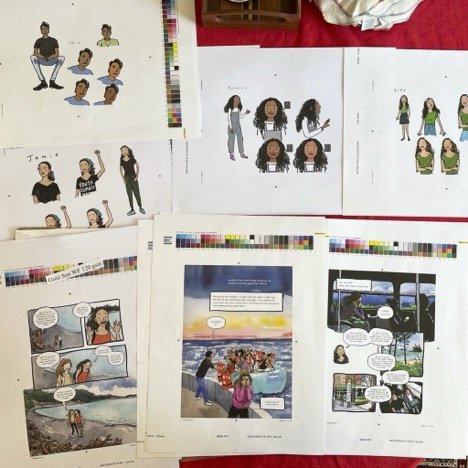
Photo courtesy of Danica Novgorodoff
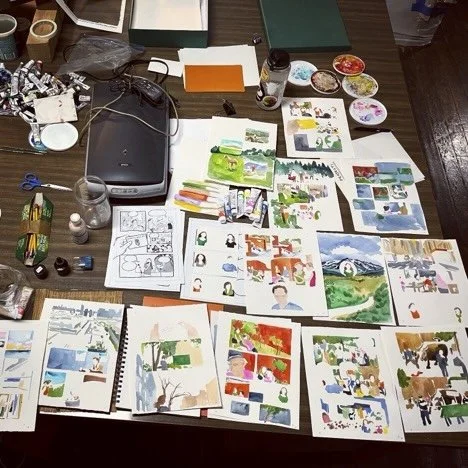
[Danica] The first thing I did was to create character sketches of all the main players in the story. Once Meera finalized the script, I did pencil thumbnail sketches of every page and collected a large digital folder full of images to use as source material.
[Uma] How was working on this book similar to working on your previous books and how was it different?
[Danica] The main way in which this book was different than any project I’ve previously worked on is that I collaborated so closely with Meera. On most other projects, the writing role and the illustrating role were strictly separated and I had very little interaction with my collaborator. This book was such a pleasure to work on because Meera and I were able to bounce ideas off each other and help each other create and edit as the book developed.
[Uma] Were there words or passages that spoke to you particularly?
Work in progress. Photo courtesy of Danica Novgorodoff
[Danica] The interlude on climate grief spoke directly to the way I felt while I was doing research for the book, but hadn’t yet found ways to take action to work against climate destruction. I felt powerless, isolated, and hopeless. Once I began to collaborate with Meera and make progress on the book, and joined climate action groups to take direct action against the corporations and politicians that are exacerbating the crisis, I began to feel hope return to me.
[Uma] Any particularly challenging pages?
[Danica] I always hate to depict tragic deaths in my artwork! So the passages about the destruction due to wildfires, and the passage about climate activist and gay rights lawyer David Buckel’s suicide, were particularly difficult for me.
[Uma] That whole interlude about ecological grief is really moving—you can almost feel the story shifting into a different space, trying to make meaning right there on the page. Which leads right to my next question.
There’s another innovative .self-referential kind of layer, comprised of both of your lives—your pathways, so to speak, into this story and this book. It includes conversations between you—those interludes that punctuate the book—as you tackle the many facets of the subject you’re presenting. It’s brilliant because it draws the reader into the notion of an ongoing conversation that will include all of our lives. So my question is, what did it mean to each of you to place yourself into this narrative in this particular way? Whose idea was it and/or how did this structural element of the book come to be?
[Meera] Meera: So glad you liked that! Neither of us really wanted to be in the book but it was also weird to have information just appear, as though from the heavens. We came up with what we called “Mini-Danica” and “Mini-Meera” as a way to reflect the genuine questions that people wrestle with, from “What is climate change?” to “What to do about ecological grief?” and “What is environmental (in)justice?” For the four youth, we always start with them at the Climate Strike in 2019, but then flash back. What leads a teenager to be on stage in front of an immense crowd of thousands? Their origin stories are revelatory. And we realized that we needed to get over our shyness and share our own origin stories as well. :)
[Uma] The book feels seamless, with the words and art—and your own stories— speaking to each other, like visual poetry in places. How do you think that synergy came to be?
[Danica] Thank you! I think that’s because Meera and I worked closely with each other to create this book, we were able to adapt the text to the images and the images to the text as the book developed. We shared source material, asked each other questions, and exchanged opinions. I can’t tell you how much I enjoyed this collaborative process!
[Meera] Me too!! This, after all, is what facing the future in a warming world is all about: finding connections and taking action.
[Uma] Thank you to both of you and congratulations on this book, with its combination of stunning visual appeal, comprehensive information, and inspiring stories of young people stepping up to effect change. It’s been a privilege to correspond with you and I can’t wait to hold this book in my hands.